

A World Removed
The American summer camp has remained a foundational experience for generations of youth for over 100 years. What sets the American camping movement apart as a 20th century educational and social revolution? And how did western North Carolina become the hub of this movement in the southeast United States?
TOPICS WE’LL EXLORE IN THIS SECTION:
scope of HISTORY + establishing camp CULTURE + WNC CAMPSCAMPFIRES & THE EMBERS OF YOUTH
THE HISTORY OF SUMMER CAMPS IN WESTERN NORTH CAROLINA
For over 100 years, summer camps in western North Carolina have fostered small worlds for children to grow physically, emotionally, and spiritually. Many former campers consider summer camp as the single most formative experience of their youth. By the 1920s, western North Carolina became the center of the American camping movement in the Southeast, influencing the social, economic, and cultural history of the region.
The American camping movement is the product of various social factors of the 19th century, including urbanization, the changing concept of childhood, the birth of child psychology, and a response to the education system of the time.
The American camping movement produced a variety of camp types, which generally fit into three categories: private camps, organizational camps (such as camps operated by the Young Men’s Christian Association (YMCA), Boy Scouts, and Girl Scouts), and agency camps (sponsored by social service agencies like the Fresh Air Fund). This exhibit focuses on privately owned camps founded in western North Carolina before 1970 and the experiences most closely connected to “sleepaway camp” for generations of campers since the early 1900s.
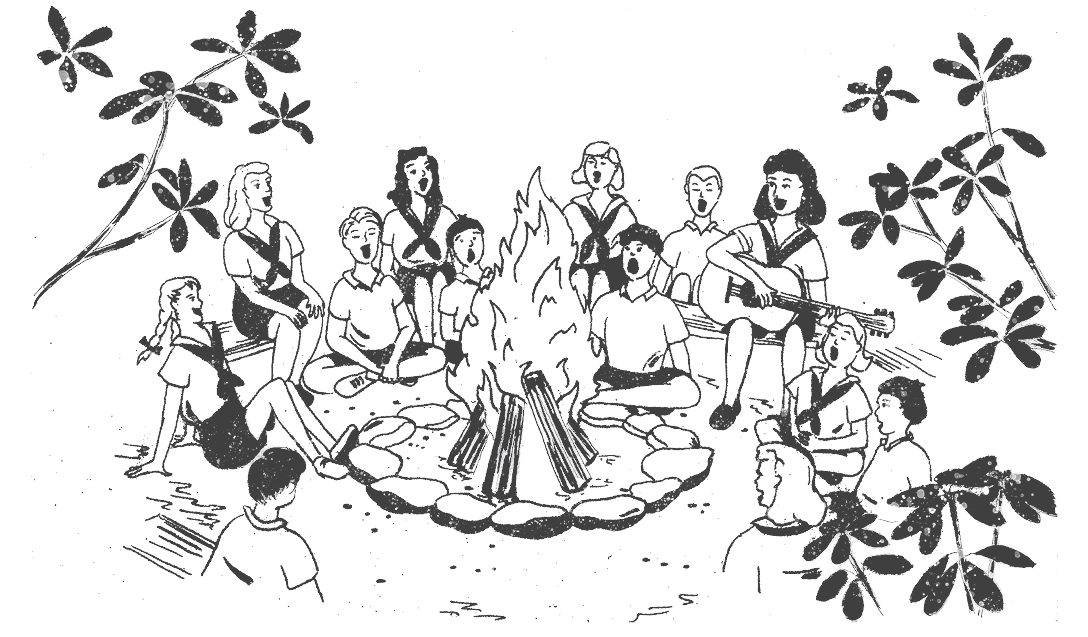
Illustration by Corinne Foster
“Summer camp is a place for fun and good times, for swimming and sports, campfires and hikes, plenty of adventure... Infinitely more important, however, are the intangible values... No [child] ever returns home the same youngster who left for camp.”
— Willard P. Verduin, Forward to A Philosophy of Camping, published by Camp Sequoyah, c. 1950s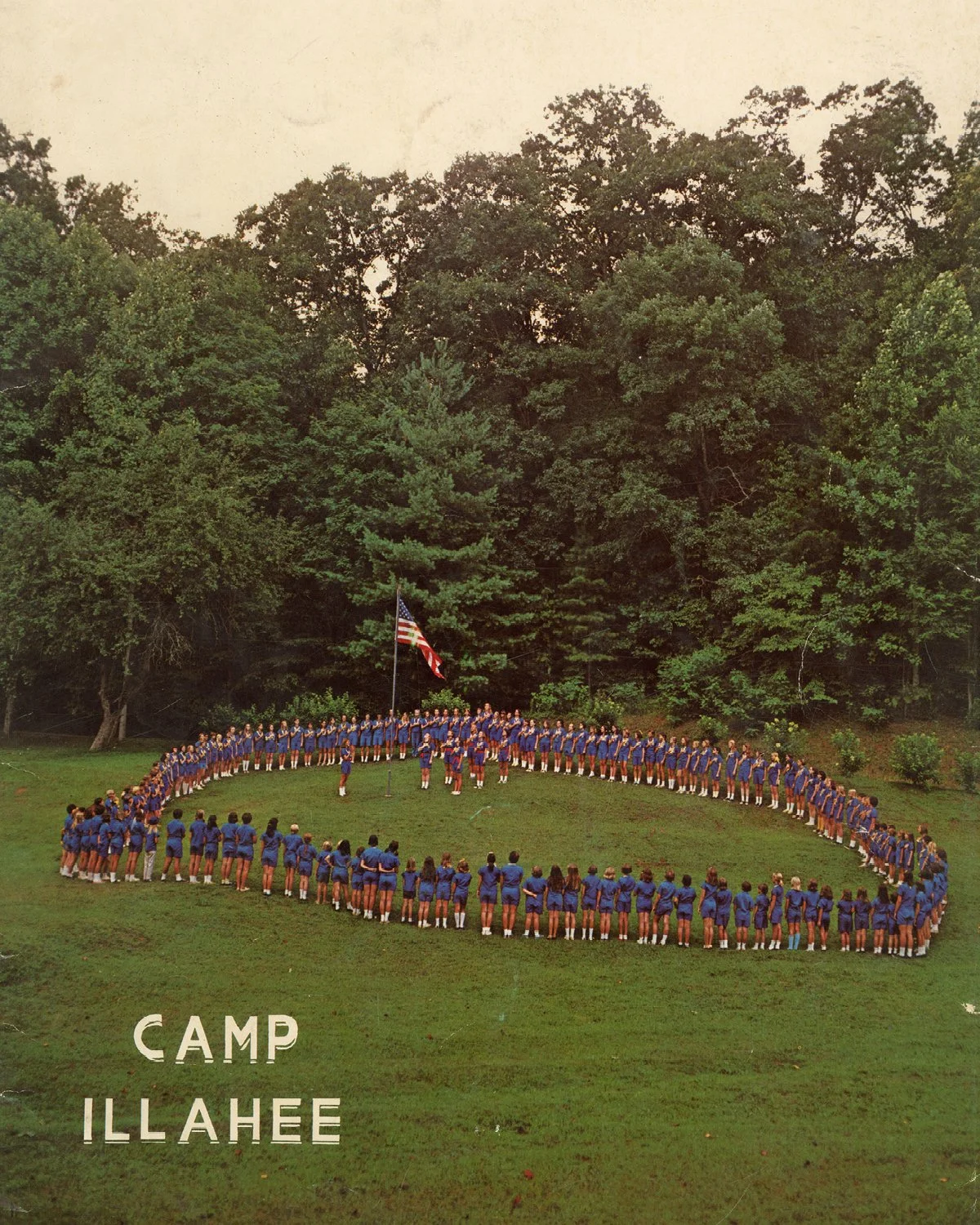
Camp Illahee (Brevard, NC), c. late 1960s
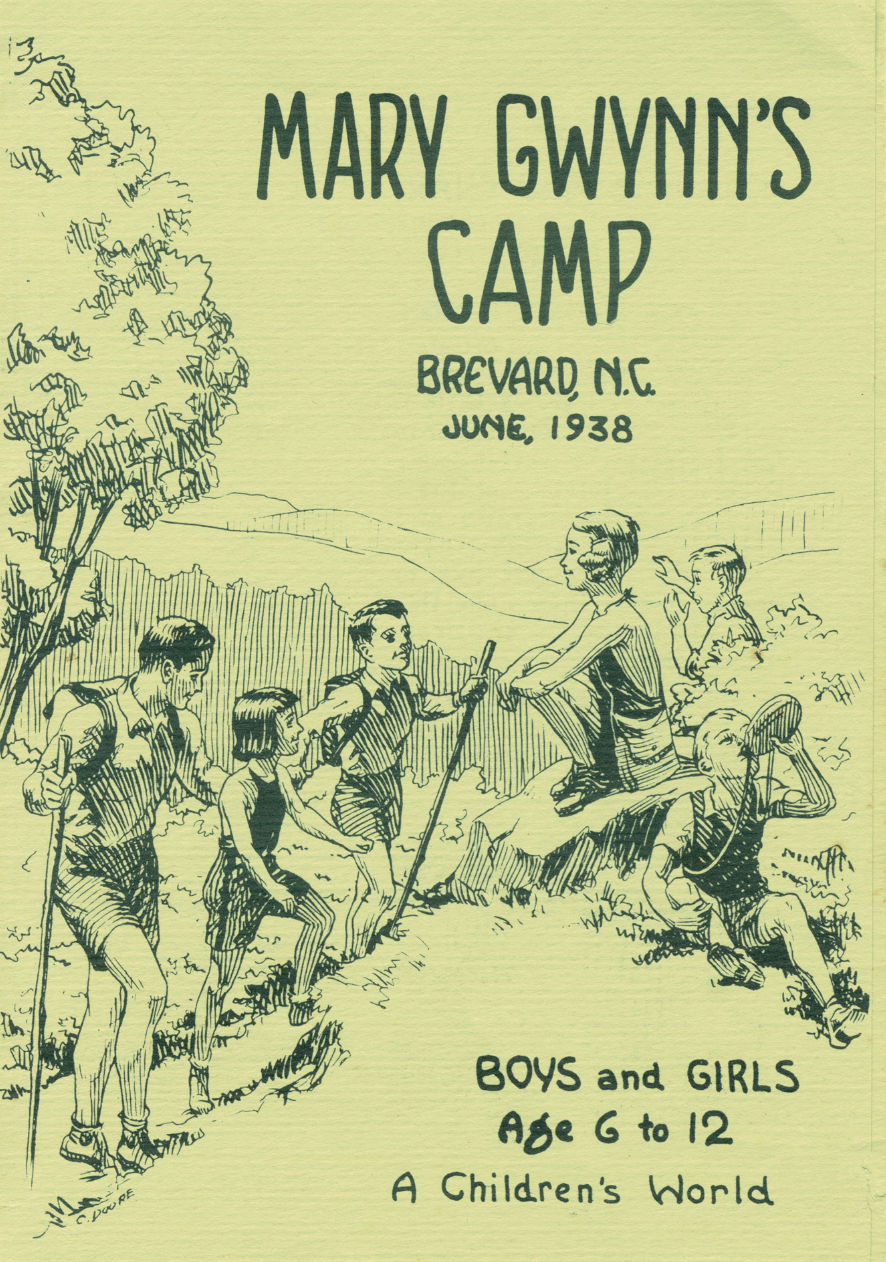
Gwynn Valley Camp (Brevard, NC) brochure, c. 1940s
CREATING A WORLD REMOVED
THE CULTURE & COMMUNITY OF CAMP
Existing as small islands, with limited contact with the outside world, summer camps are a type of insular community, not dissimilar to religious groups, boarding schools, and cults. In this environment, children experienced a world that felt freeing, wild, and challenging.
Camp directors built communities, removed from campers’ homes and parents, to have their own set of rules, norms, and social structures. Camps have their own traditions, language, music, shared values, and histories to bind their participants quickly and tightly together.
These types of closed societies have both positive and negative effects on their communities, including a strong preservation of tradition, quick social cohesion, resistance to change, and exclusion and discrimination.
At the beginning of the 20th-century, summer camps primarily served middle and upper-class white Protestant boys, but those demographics shifted and expanded, with camps for girls, immigrants, religious groups, ethnic minorities, and specific populations (such as children with disabilities, cancer, and trans youth) now prevalent across the country.
“Children need to be believed in, nurtured, and loved as surely as do flowers in your garden. Grown-ups need to be believed in, trusted, and loved, too. And so at [camp] there is a small, democratic world where the seeds of good will and freedom are planted and where everyone is important…Each one is a vital part of a whole. We all matter to each one and to the whole world.”
— Dammie Day, Founder of Camp Merrie-Woode (Sapphire, NC), c. 1920s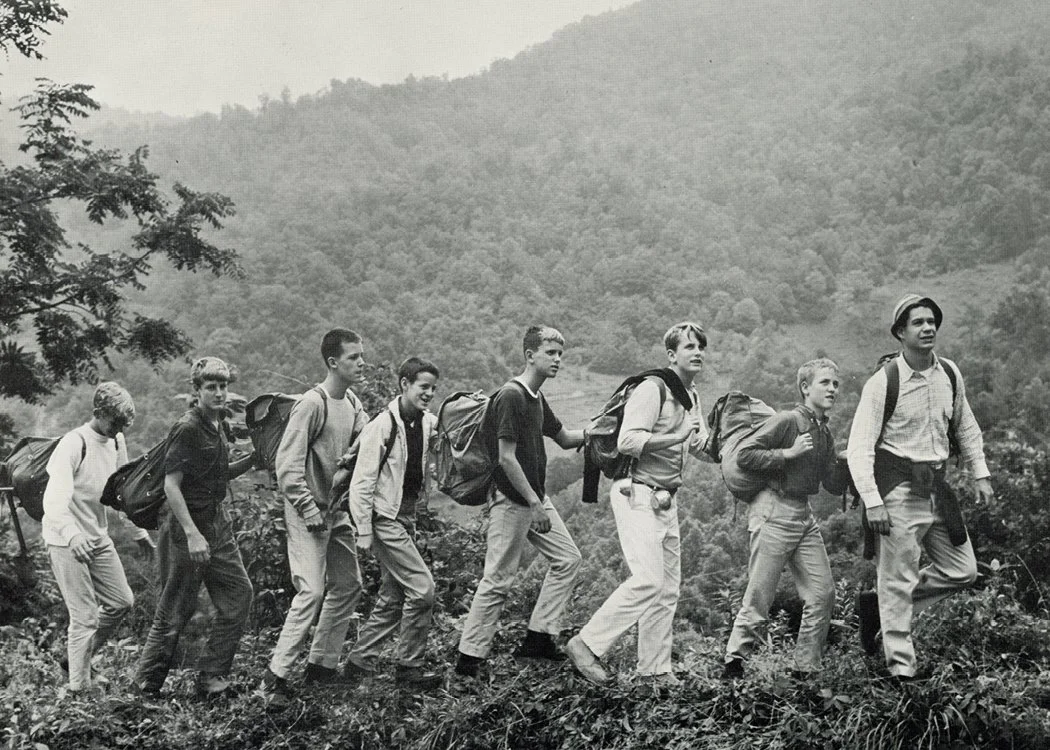
Camp Sequoyah (Weaverville, NC),
c. 20th century
CAMPS TIED TO THE MOUNTAINS OF WNC
MAPPING THE THREADS OF A REGIONAL LEGACY
The mountains of western North Carolina have the largest concentration of camps in the southeastern United States. This map features privately owned residential camps founded before 1970 that are still in operation today. These camps, and dozens of others founded more recently, continue the legacy of the camping movement in western North Carolina, established over 100 years ago.
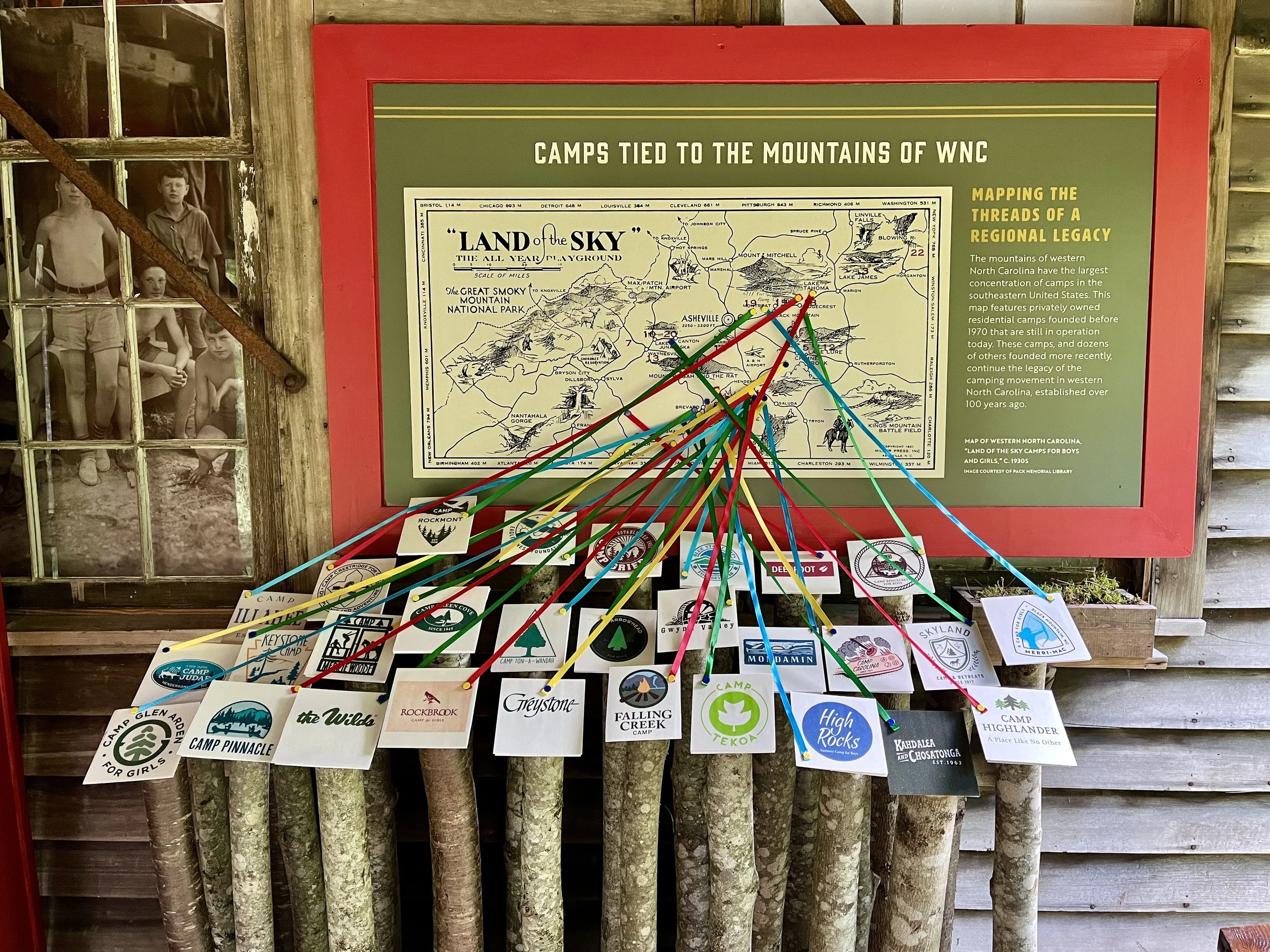
Museum exhibit display at Cashiers Historical Society (Cashiers, NC).
Ribbons connecting summer camps to their locations in WNC.
Map of Western North Carolina, “Land of the Sky Camps For Boys and Girls,” c. 1930s
Image courtesy of Pack Memorial Library
“The organized summer camp is the most important step in education that America has given the world.”
— Charles W. Eliot, President Emeritus of Harvard University, 1922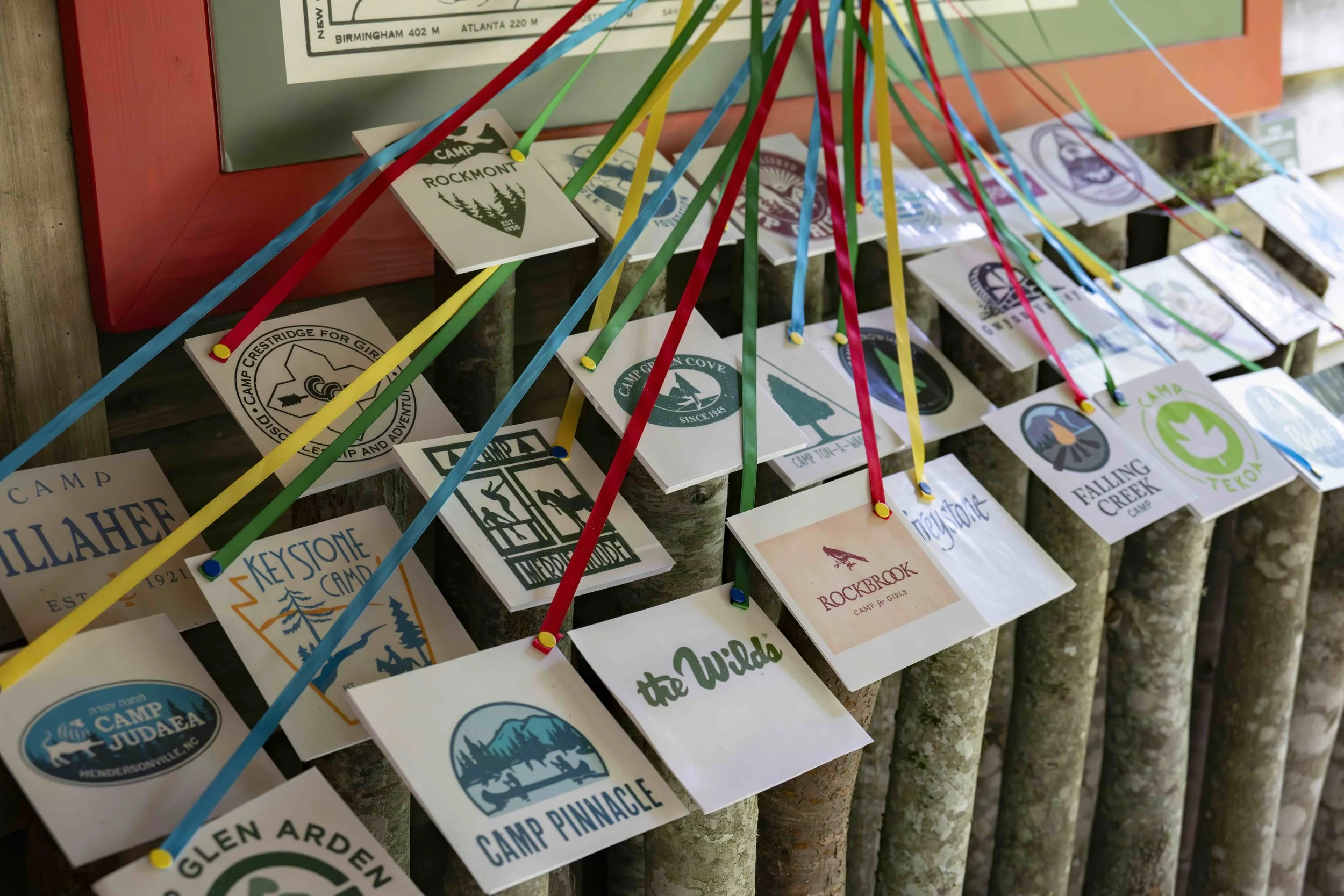
“SUM·MER CAMP”
/ˈsəmər ˌkamp/ A sustained experience which provides a creative, recreational, and educational opportunity in group living in the out-of-doors. It utilizes trained leadership and the resources of natural surroundings to contribute to each camper’s mental, physical, social, and spiritual growth.
— American Camp AssociationINTRODUCTION • camp origins • CAMP evolutions • CAMP CULTURE • CAMP LIFE • MUSEUM GALLERY