

Camping Through History
Summer camps did not exist in a vacuum. How did national and global events along with social, political, and societal movements affect camps throughout the 20th century?
TOPICS WE’LL EXLORE IN THIS SECTION:
cultural appropriation + women's movement + wwiI + civil rights + camp recessionPOW WOWS & MINSTREL SHOWS: RACE & PLAYING INDIAN AT SUMMER CAMP
CULTURAL APPROPRIATION IN THE CAMPING MOVEMENT
The early summer camp movement drew upon a nostalgic vision of American childhood rooted in a romanticized view of the pioneer era, which relied on racist tropes and exclusionary narratives. Campers arrived at camp with ideas about race and racial difference acquired from their interactions with their parents and home communities. These views were further perpetuated in popular culture at the time, including Wild West West shows, blackface minstrel shows, radio programs, and Hollywood. Even Peter Pan and the Lost Boys, symbols of youth and freedom, were deeply connected to the problematic idea of “playing Indian.”
THE USE OF BLACKFACE & MINSTRELSY AT SUMMER CAMP
The minstrel show craze of the 1800s decreased in popularity as the camp movement took hold, but the use of blackface in performance and entertainment continued at camps, especially in the South, well into the 20th-century. Campers embraced the use of blackface like they did “playing Indian” and portrayed people of tribal African descent as primitive and childlike, harkening back to a fictional and romanticized version of the Old South, slavery, and American plantation life. By the mid-20th century, the use of blackface shifted to a more subdued form as campers performed parodies of the radio show Amos and Andy, the musical Showboat, and characters like Aunt Jemima. Campers use of blackface evolved alongside popular culture's embrace of the caricature, illustrating how broader cultural trends shaped insular camp words.
APPROPRIATION OF INDIGENOUS CULTURES AT SUMMER CAMP
Camps often built and defined their founding narratives and traditions around the use of Native American lore, names, and imagery. Camp directors often named their camps and cabins using actual or invented “Indian” words and divided campers into groups of “tribes.” Many early boys’ camps followed the philosophy of G. Stanley Hall, who believed that boys needed to express their “inherent savagery.” These camps aimed to create a primitive, pre-industrial landscape of pioneer America. The use of elaborate and fantasized Native American ceremonies created imagery deeply connected to camp culture, traditions, and respected rites of passage.
Whether “playing Indian” or donning blackface, white campers’ ability to play these roles for an evening reflected their identity as members of the elite white society that created these harmful and racist caricatures.
This article describes an annual minstrel show performance at Camp Carolina (Brevard, NC) in 1933.
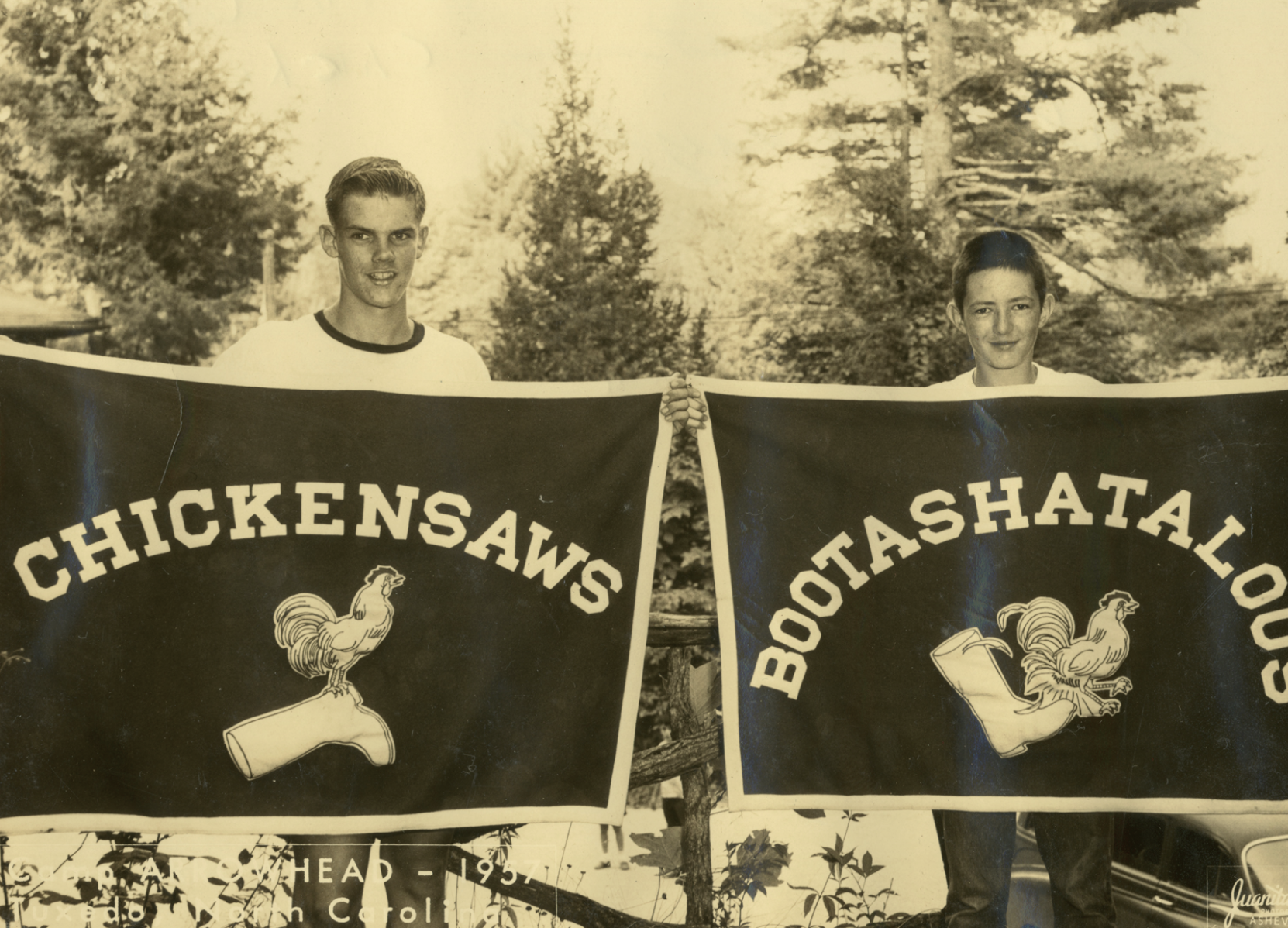
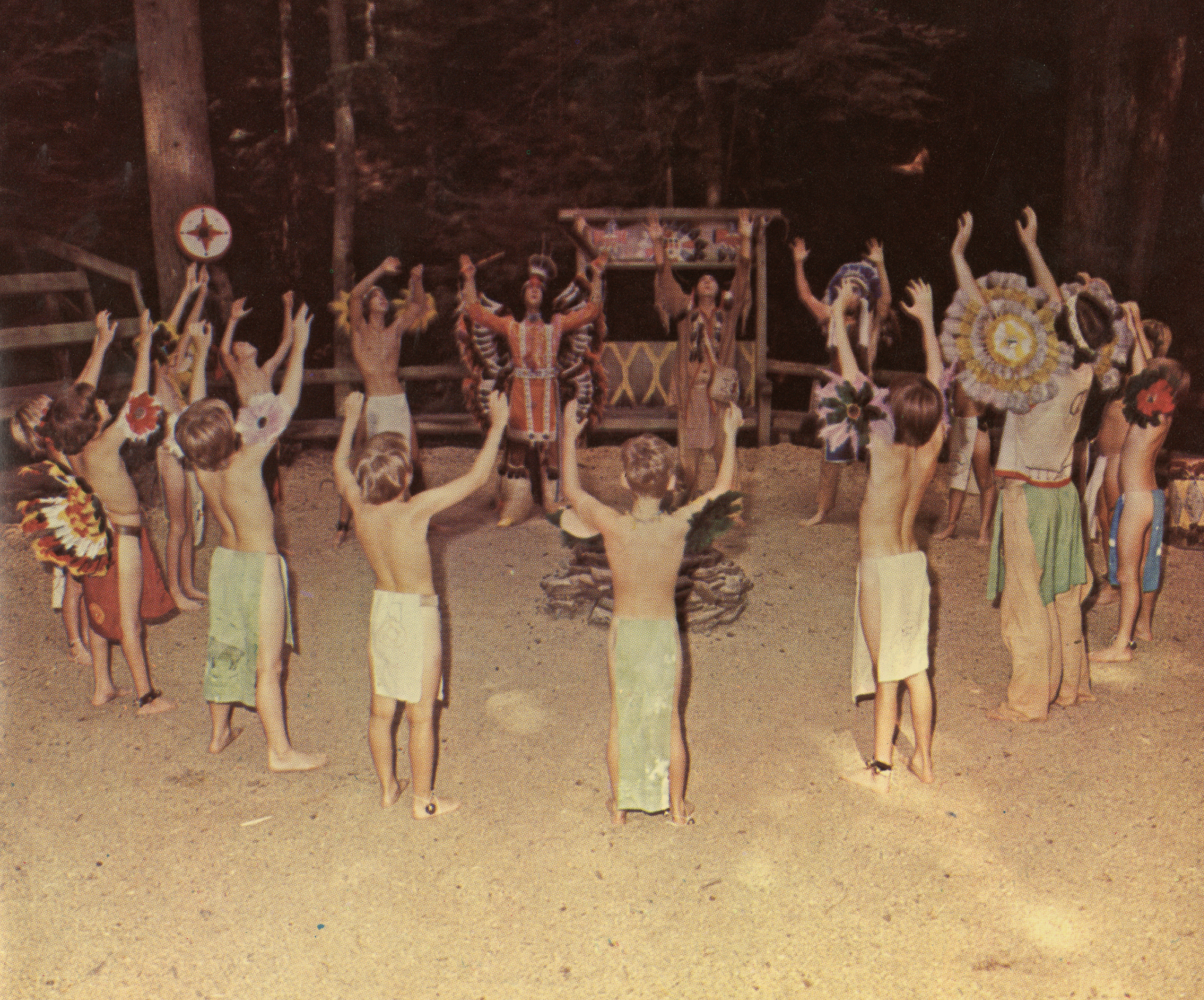
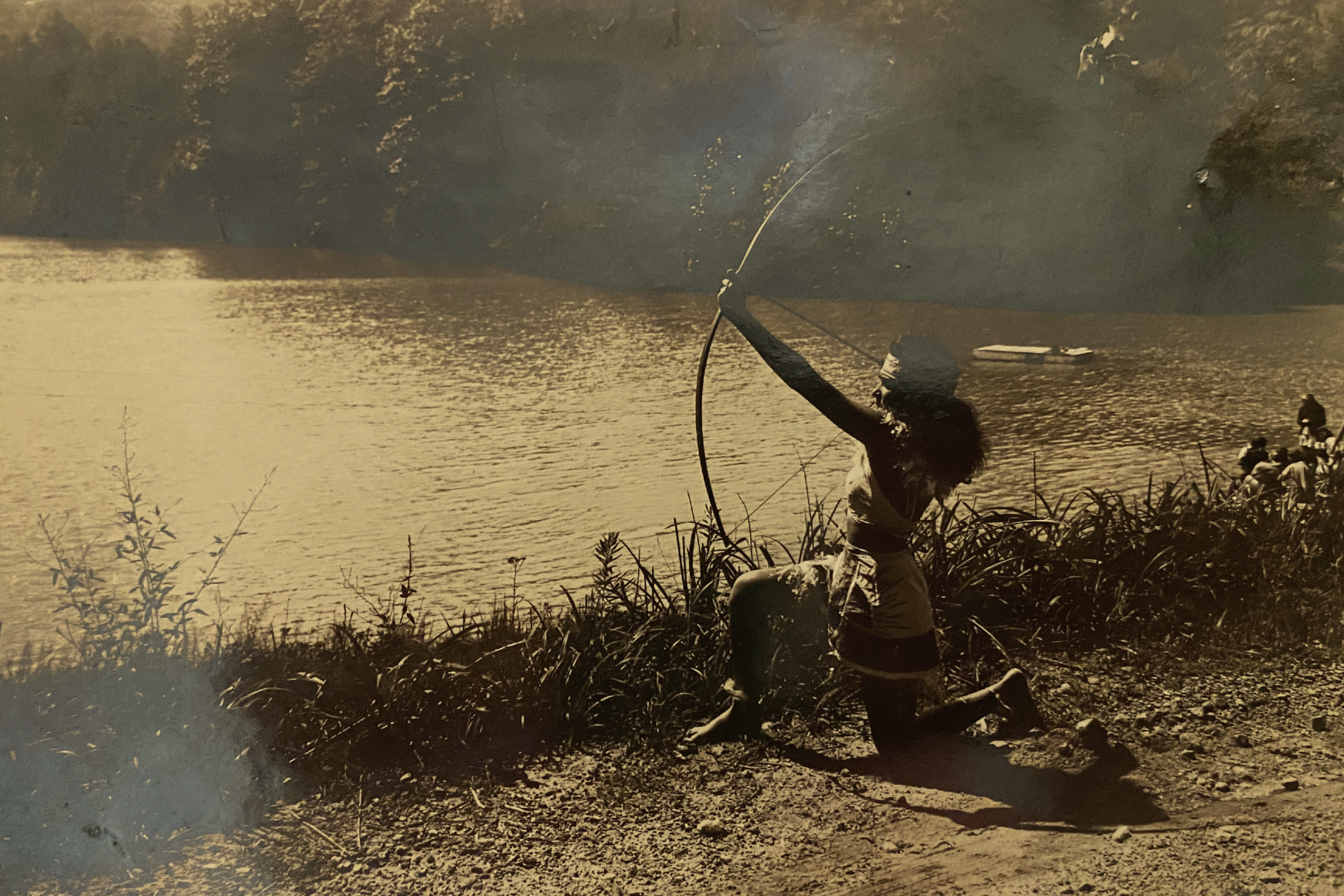
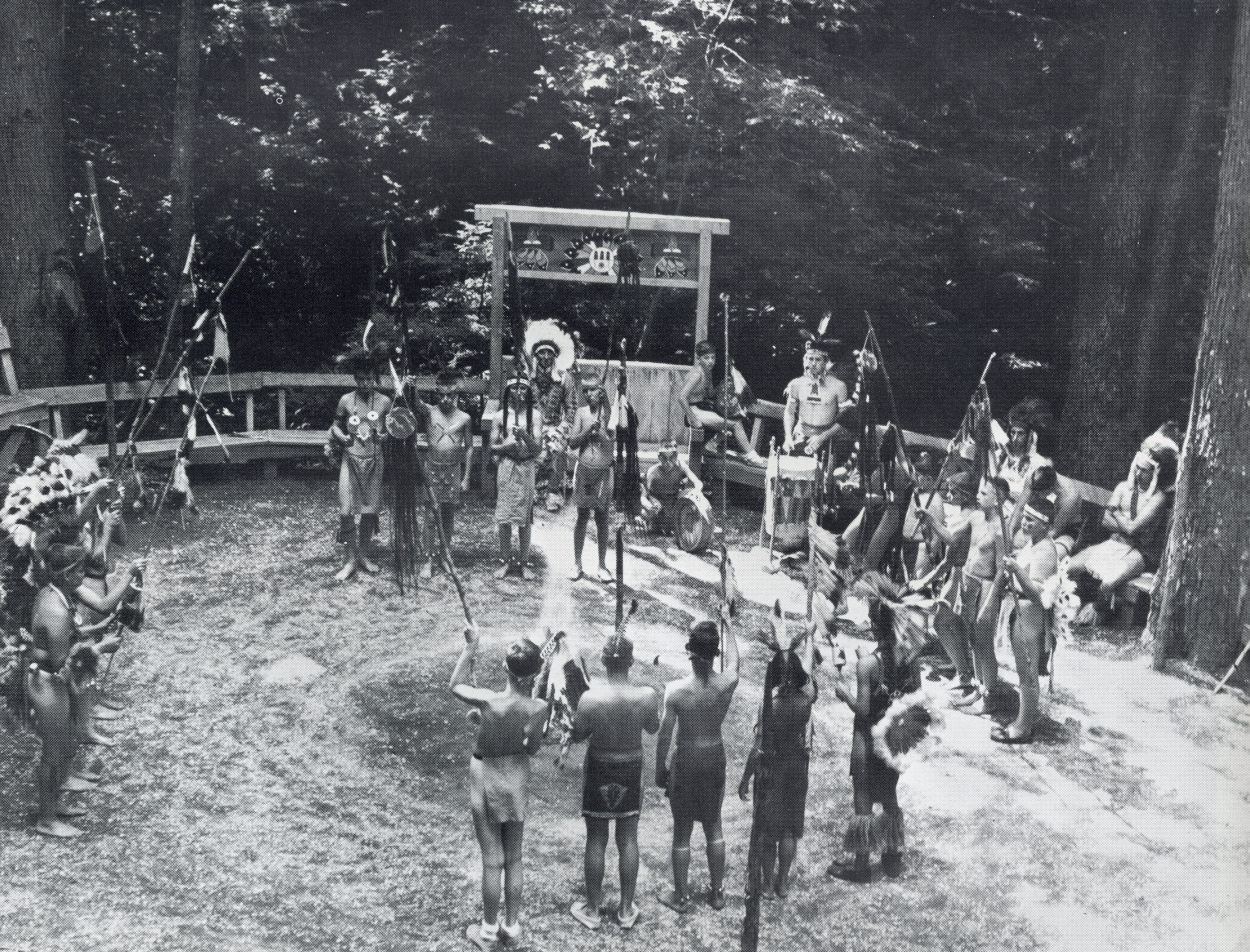
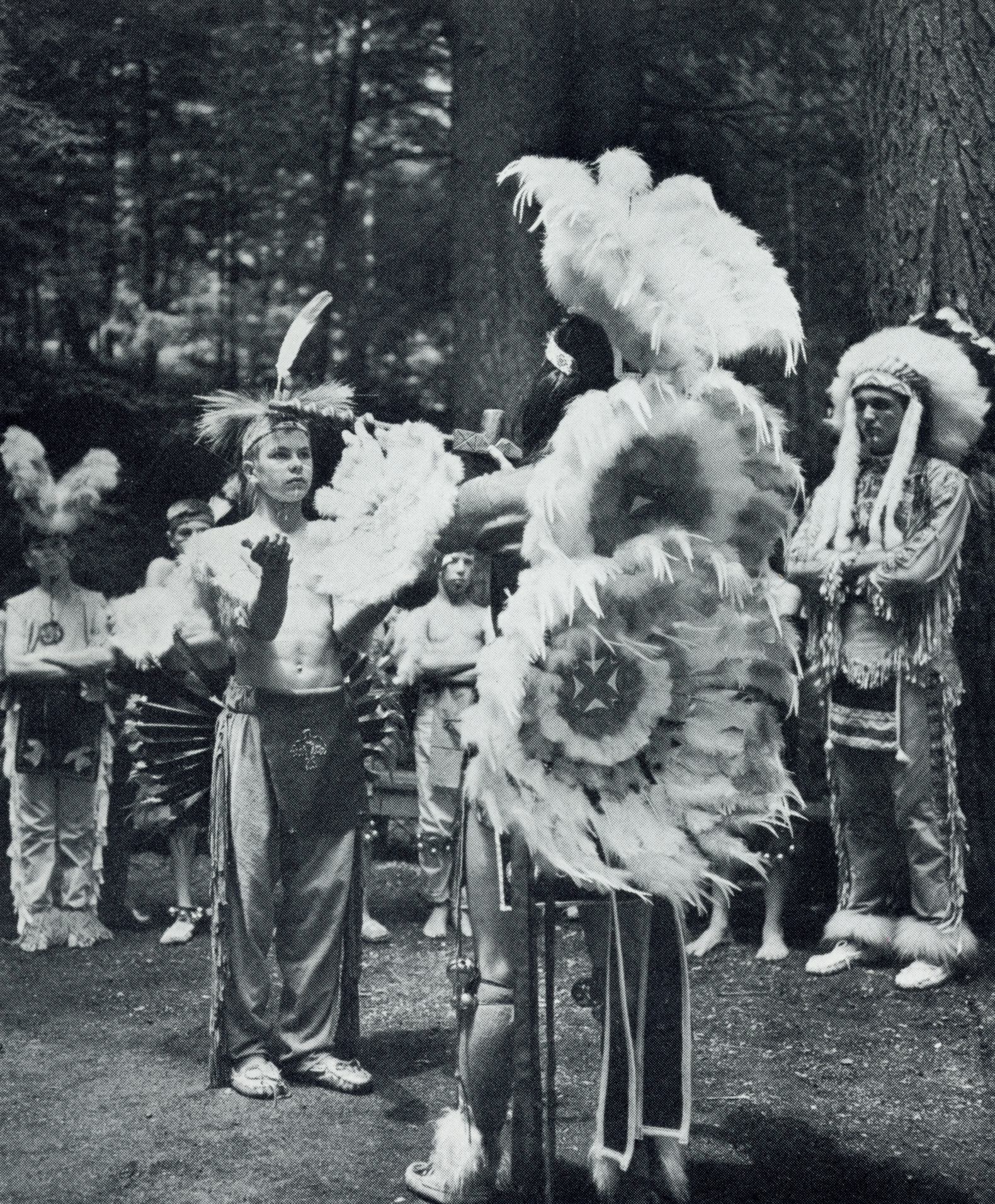
Film clips from Camp Arrowhead (Tuxedo, NC) and Camp Sequoyah (Weaverville, NC), c. mid-20th century
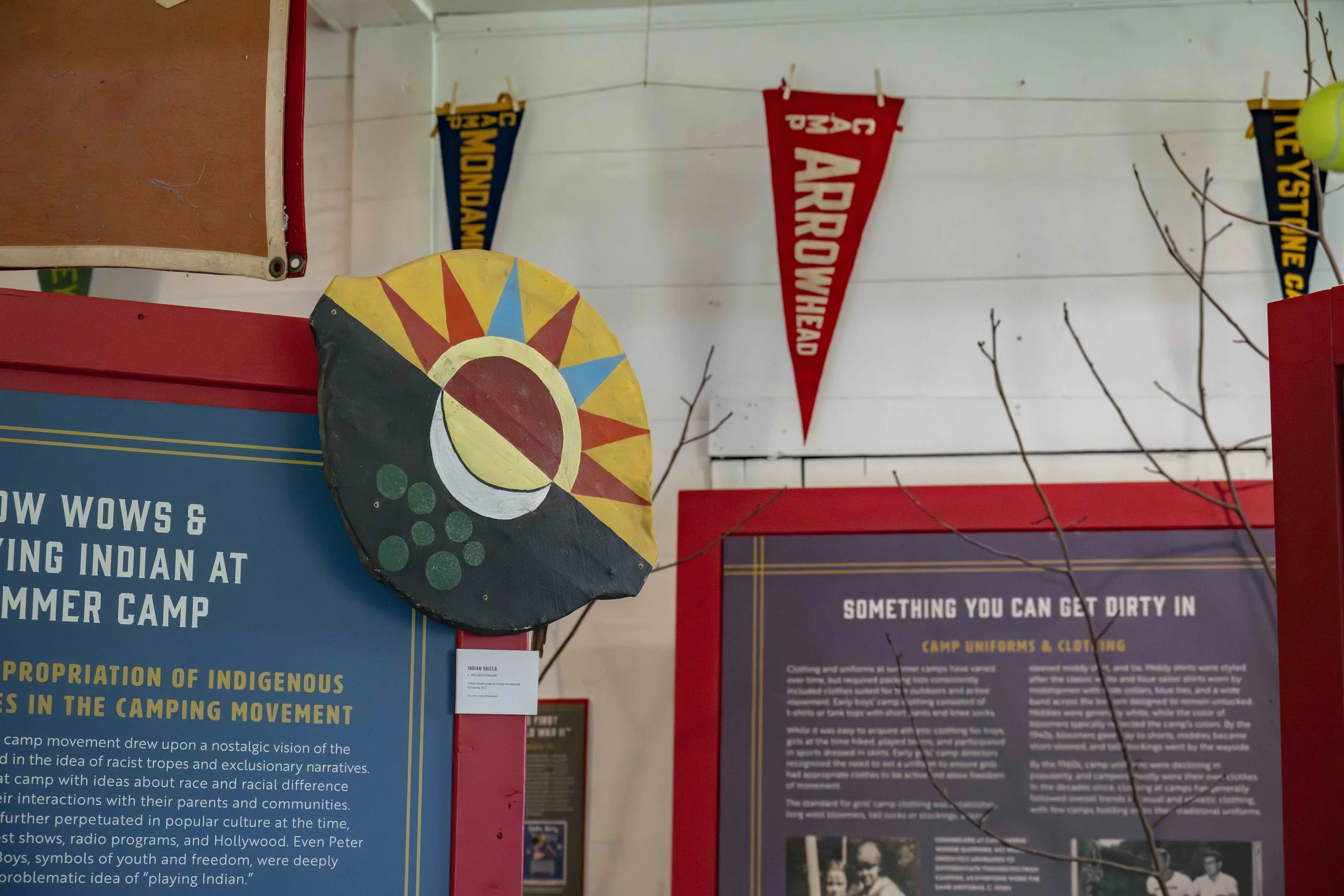
Tribal Shield used at Camp Arrowhead, c. 20th century
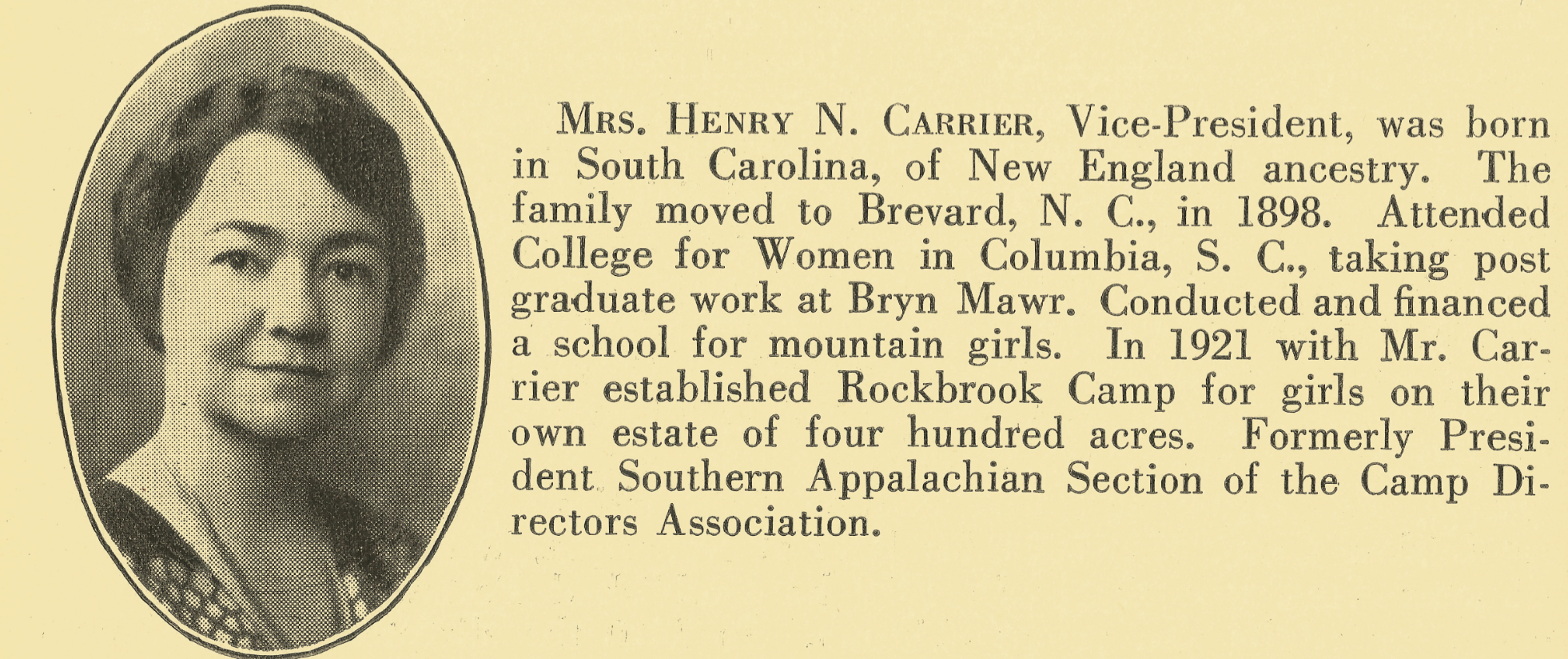
In 1930, Nancy Carrier, Director of Rockbrook Camp (Brevard, NC), served as Vice President of the Camp Directors Association (CDA). She is listed here in the 1930 edition of “Camps and Camping” Magazine.
A GIRL’S WORLD
THE CONVERGENCE OF THE WOMEN’S MOVEMENT & THE CAMPING MOVEMENT
The girls’ camping movement rose alongside the passage of the 19th Amendment, giving American women the constitutional right to vote in 1920. By 1915, there were at least 100 girls’ camps throughout the country, and by 1925 that number had more than doubled. Female camp directors were organizing and professionalizing their industry throughout the early part of the 20th century. In 1916, a group of female directors, led by Laura Mattoon, formed the National Association of Directors of Girls’ Camps (NADGC). Together, they shaped their industry to provide girls access to the same kinds of camp experiences as boys.
In 1924, the NADGC merged with its male counterpart, the Camp Directors Association of America (CDAA), to create the Camp Directors Association (CDA). Mattoon ensured that the CDA’s constitution and bylaws required that the presidency alternate between a man and a woman, allowing women to assume executive positions in the organization. This move served female camp directors well, including women in western North Carolina, as many would go on to serve executive board terms in the Southeast and national divisions of the organization.
Many directors and founders of girls’ camps in this era were progressive, college-educated women. Inside the gates of their camps, they created a world that mirrored the one they wished to live in — where women were at the center of leadership. Summer camps allowed girls to experience an independence that was traditionally reserved for boys.
“The camp that counts is training its young people…that they will make it easier when women sit with men around the council boards of the world’s future.”
— Lyman P. Powell, Educational Department Director, Cosmopolitan Magazine, From an address before the National Association of Directors of Girls’ Camps, November 25, 1922“Among the many things we are trying to do in camps is to develop a keen and solid sense of responsibility toward the new voting citizenship that now has become a part of a woman’s life. If [America’s girls] are to be worthy heirs of that which has been won they must be prepared to assume their new responsibility, a responsibility that demands from them concerted effort and action.”
— Laura Mattoon, Secretary of the National Association of Directors of Girl’s Camps, 1922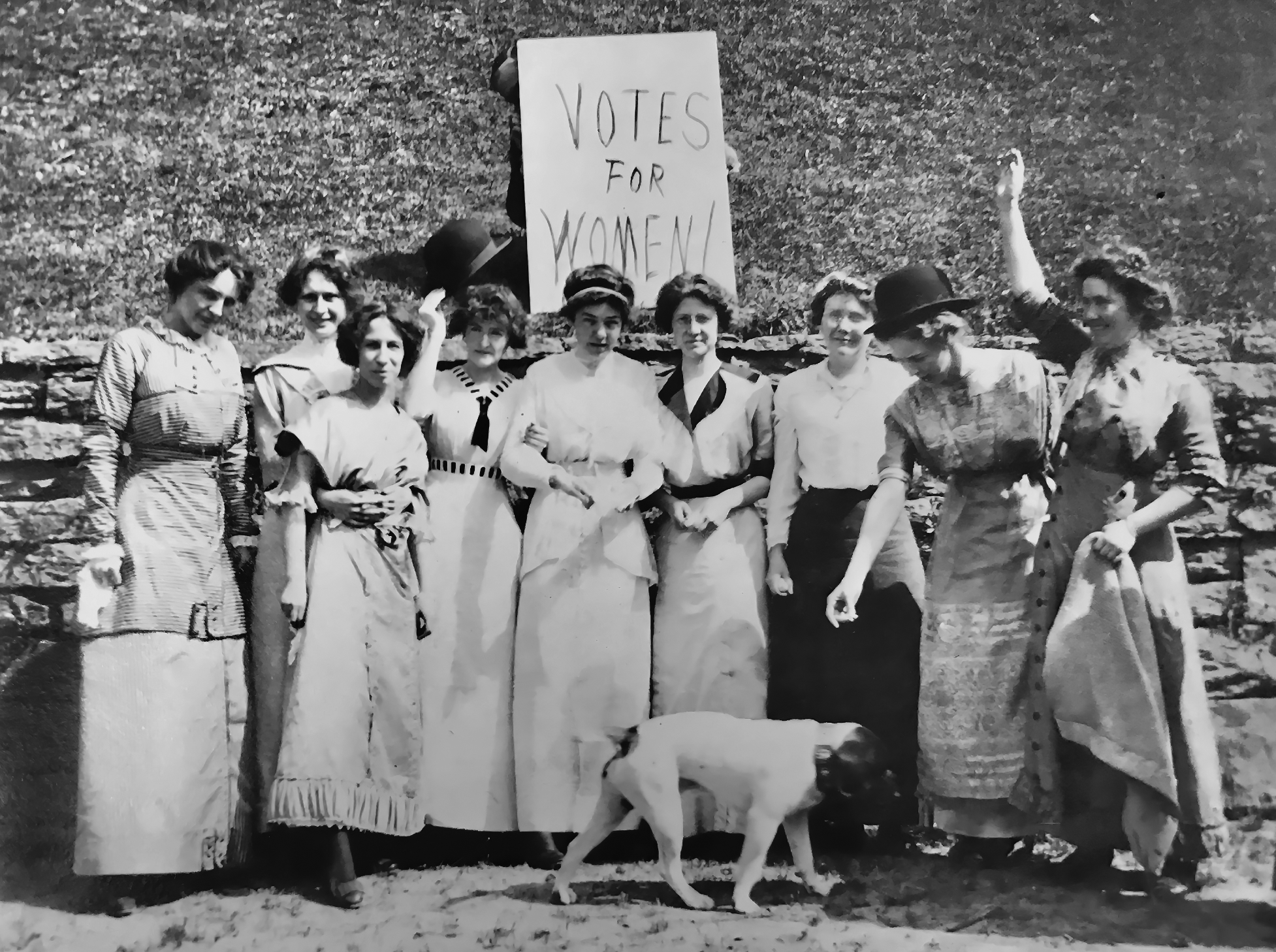
Nancy Carrier (center), founder of Rockbrook Camp (Brevard, NC), campaigns for women’s right to vote with fellow suffragists, c. 1910s.
HAVENS FROM A WORLD AT WAR
HOW WWII SHAPED THE CAMP EXPERIENCE
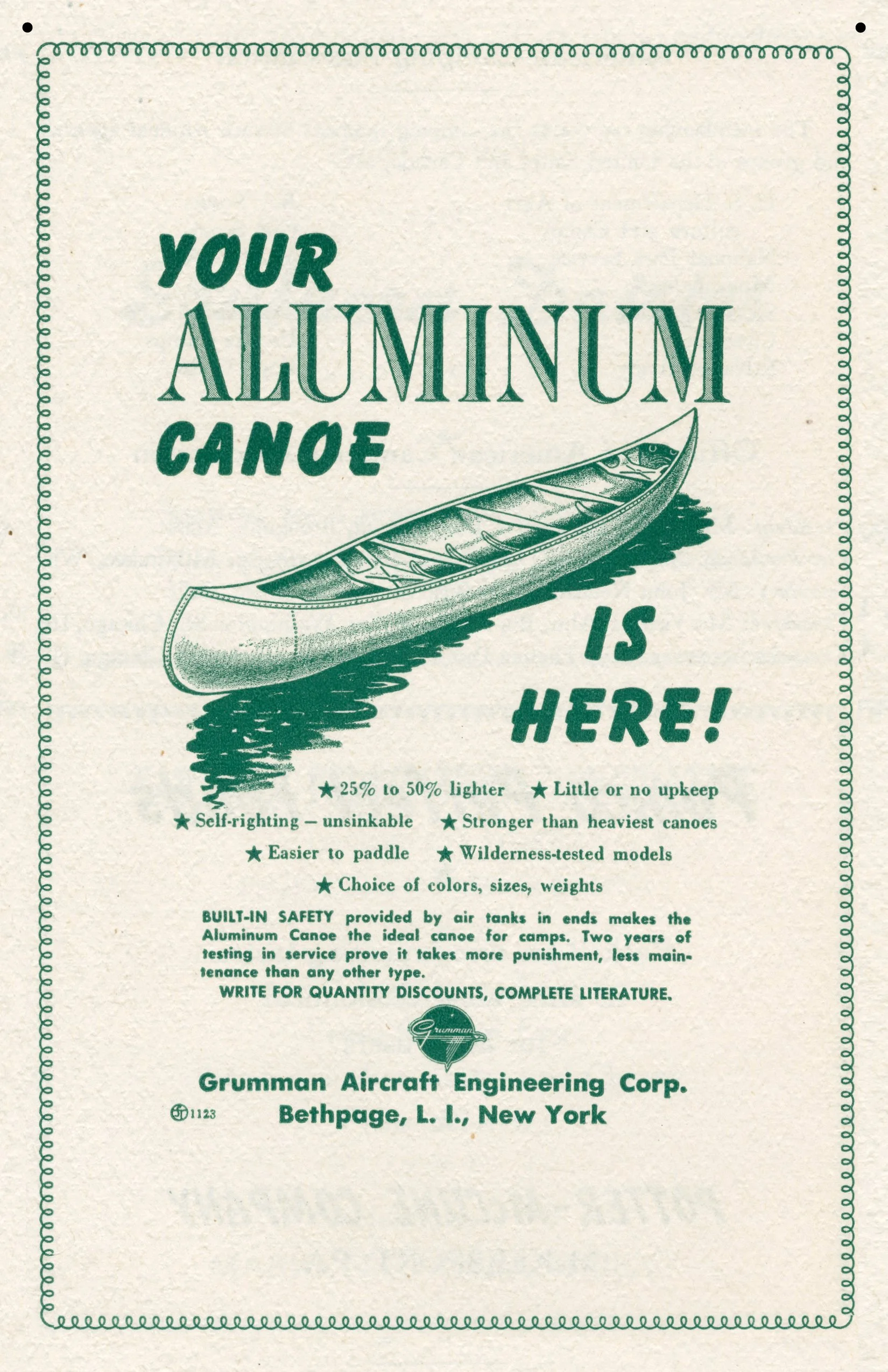
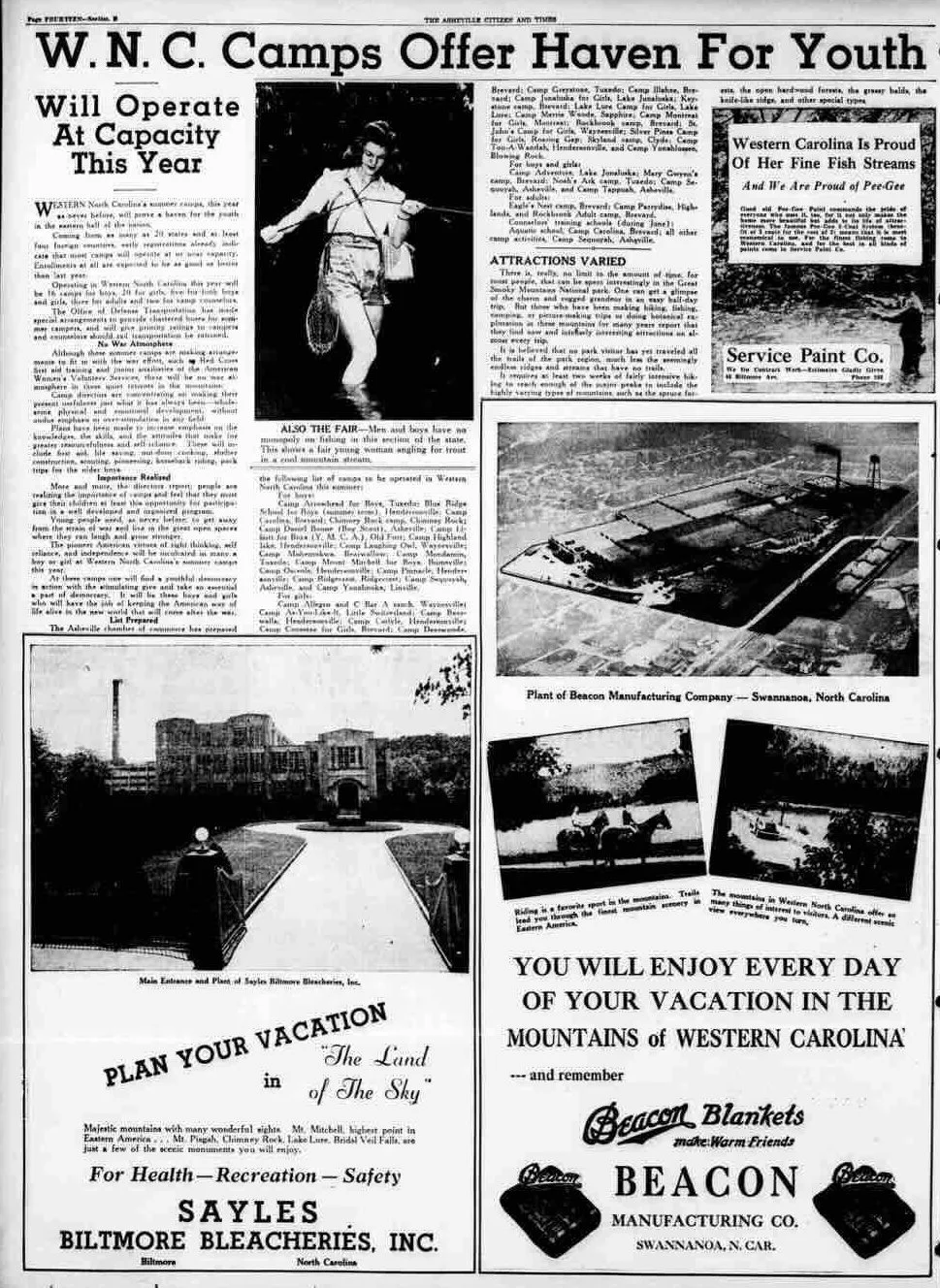
World War II brought challenges for summer camps. Between 1942–1945, many camps shut down. Those that stayed open had to adapt to restrictions and wartime hardships.
For boys’ camps, finding male staff members above the age of 18 became difficult with so many young men enlisted in the armed services. Many closed during the war years of 1942–1945, and some never reopened.
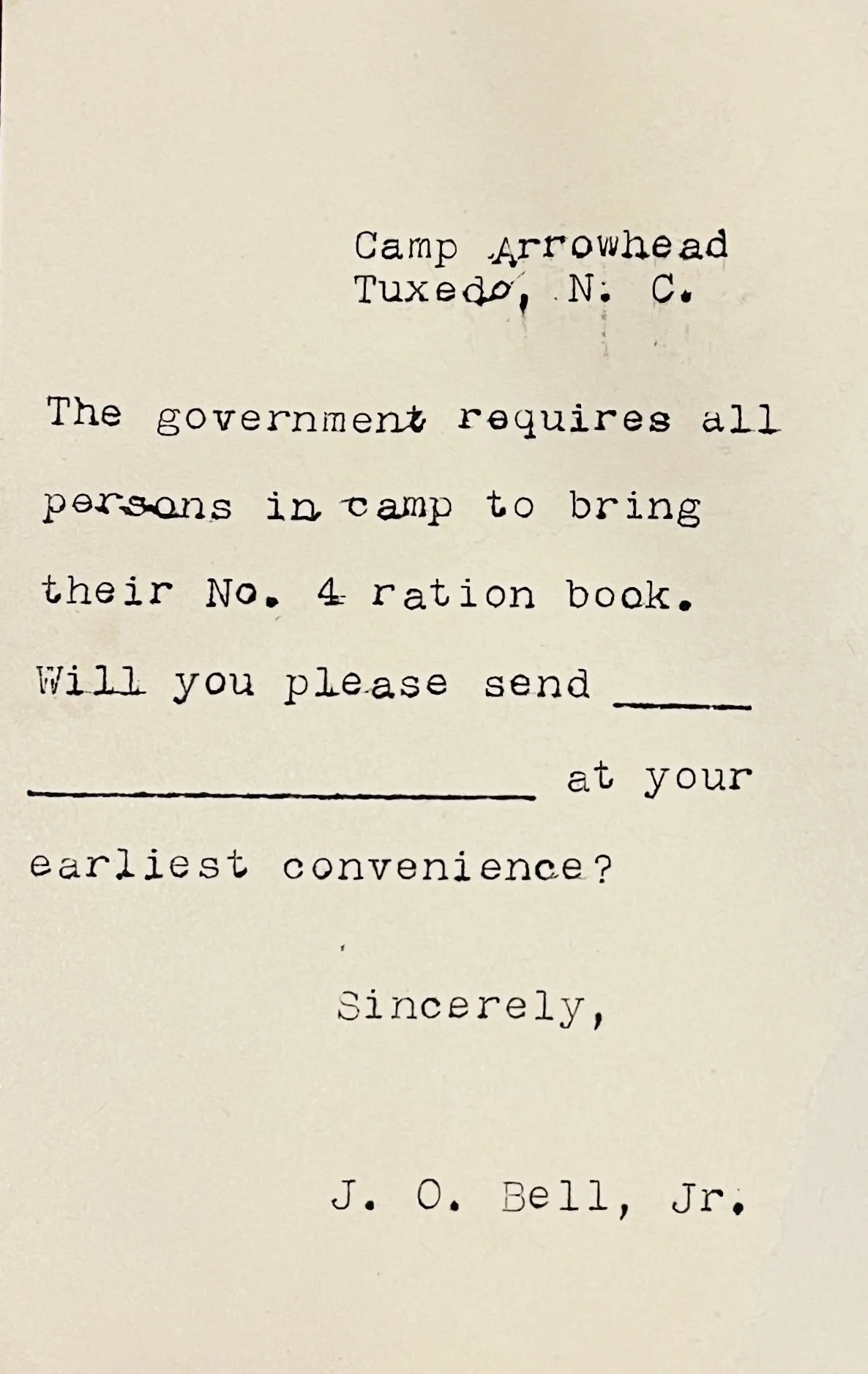
Rationing presented an enormous challenge. The government rationed items, including automobiles, tires, and gasoline, to prevent shortages and control inflation. Americans were allotted ration cards and stamps to purchase their share of household staples, including meat, sugar, and dairy.
To stay in operation, camps needed a Certificate of War Necessity, which allowed businesses deemed crucial to the war effort to have access to scarce resources. Leaders from the American Camp Association and several camp directors banded together to lobby the federal government, arguing that camps played a vital role during the war. They succeeded, and President Franklin D. Roosevelt declared summer camps essential, granting them access to some rationed resources, most notably gasoline.
Camps were given enough gasoline to transport campers to and from train stations, but for families traveling by automobile, gasoline rationing made travel to camp difficult. In western North Carolina, trips out of camp to paddle local rivers or hike in national forests were either greatly reduced or completely eliminated.
Camps pooled together portions of camper families’ ration stamps and joined in the national effort of growing victory gardens to help supply their kitchens. Even with these measures, camps found it difficult to provide enough food during the war years.
“AMERICA’S FIRST HERO OF WORLD WAR II”
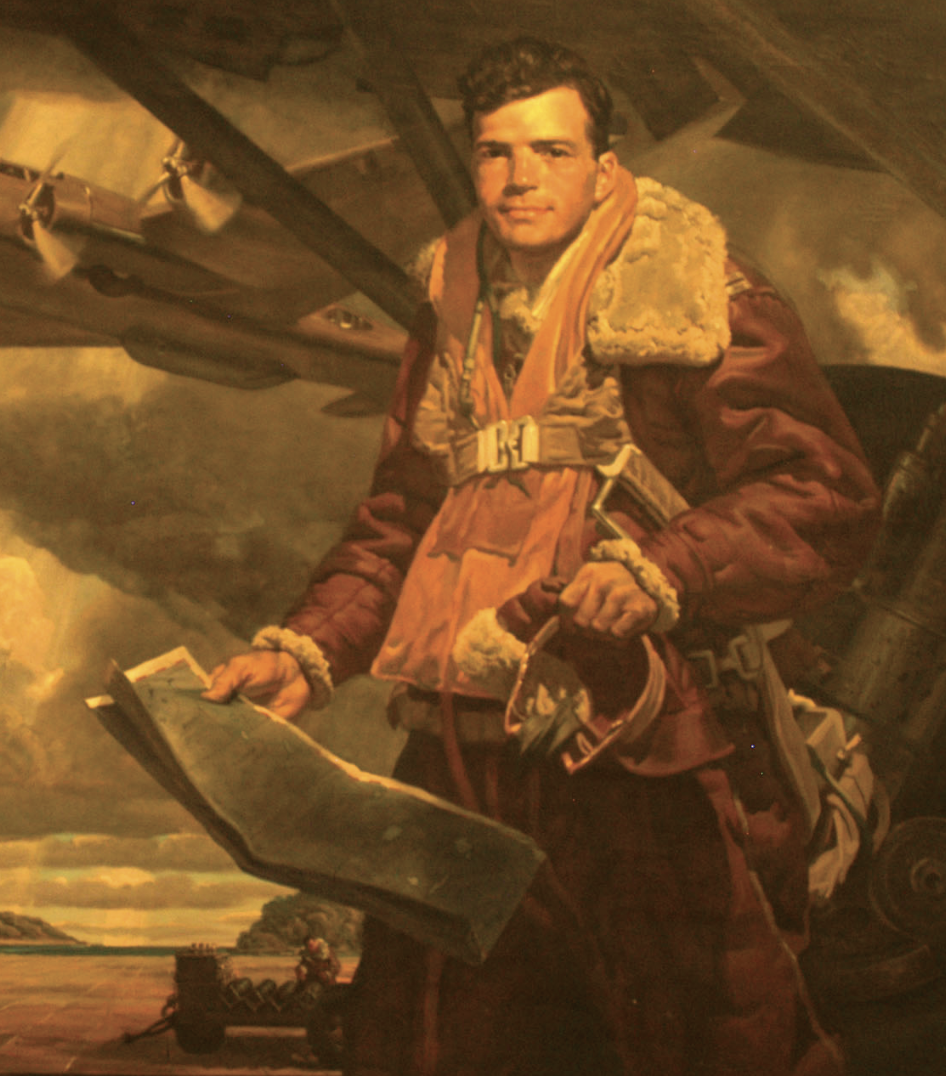
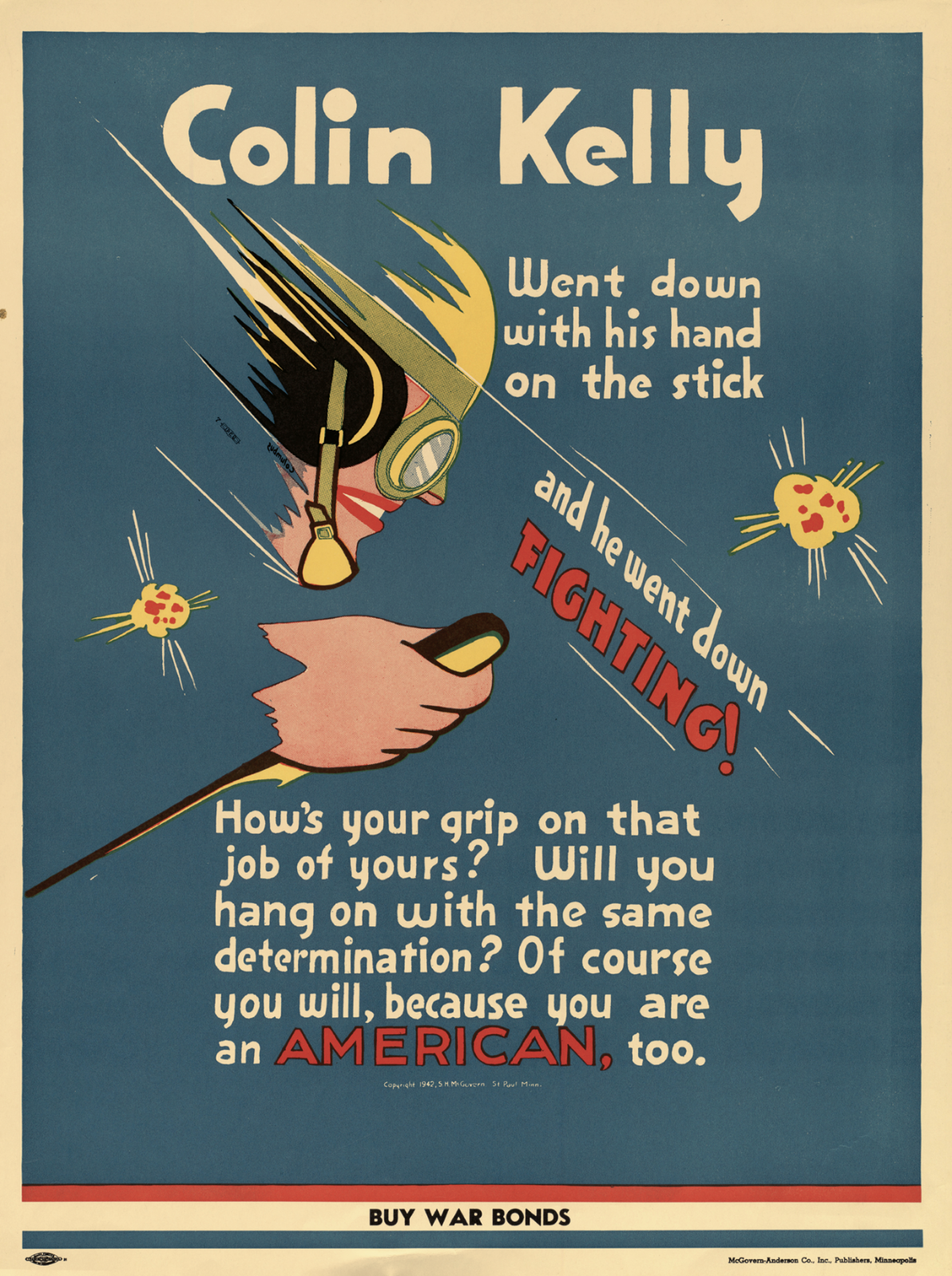
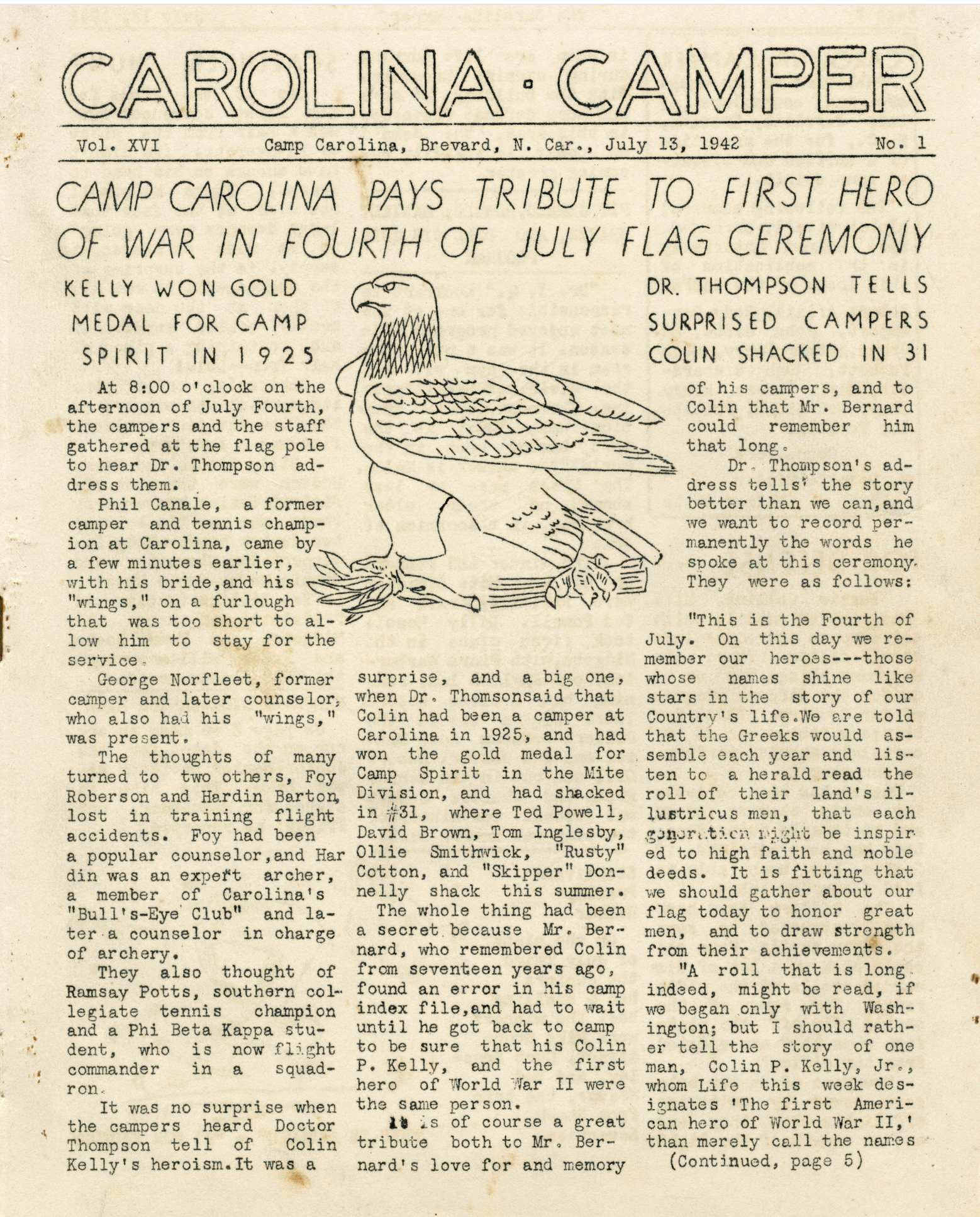
Colin Purdie Kelly, Jr. (1915–1941), widely regarded as “America’s First Hero of World War II,” was a camper at Camp Carolina (Brevard, NC) during the summer of 1925.
On December 10, 1941, Kelly flew a B-17 bomber plane over the Philippines, scouting for Japanese warships. After receiving enemy fire, Kelly ordered his crew to jump from the aircraft while he steadied the plane long enough to give them the opportunity to parachute to safety. Kelly went down with his plane. On July 4, 1942, Camp Carolina honored Kelly at a memorial ceremony held at the camp’s flagpole.
“We are going to need camps for children this coming summer as we have never needed them before. They used to be considered luxuries; now they should be considered necessities.”
— Angelo Patri, Author and Educator, “Summer Camps in the Land of the Sky,” 1942 Edition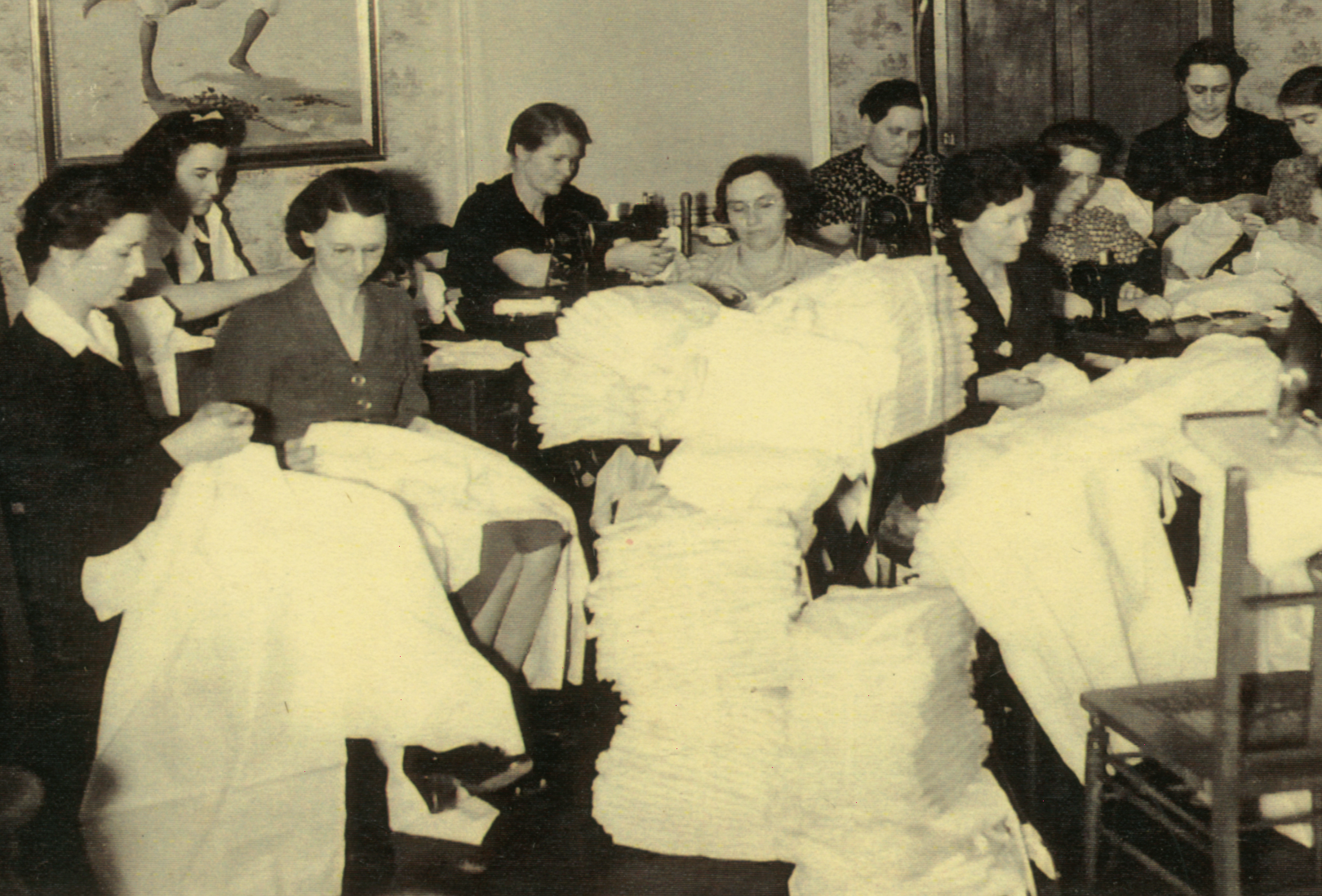
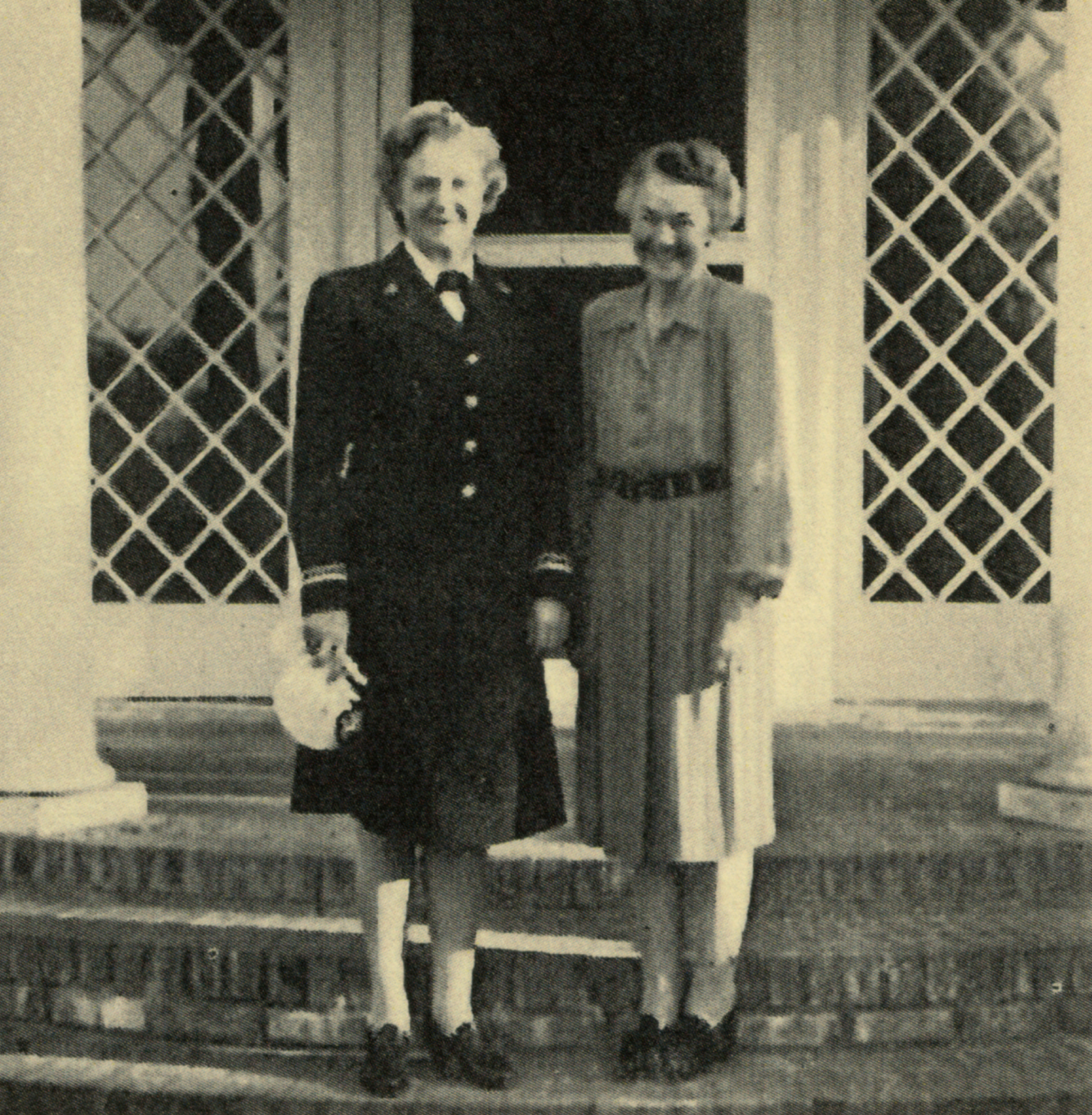
Nancy Carrier closed Rockbrook Camp (Brevard, NC) during WWII to focus on supporting the war effort. Pictured here is her Brevard community group sewing bandages for troops overseas.
Camp Green Cove (Tuxedo, NC) was founded in 1945 on Rockbrook’s campus while it remained closed.
CAMPING THROUGH THE CIVIL RIGHTS MOVEMENT
SEGREGATED CAMPS
Through much of the twentieth century, summer camps in western North Carolina were segregated spaces — just like beaches, pools, and other symbols of American summer. Camps reinforced the racial and religious homogeneity of the campers’ home communities.
Though rare, there were a few camps created for Black youth, including Camp Atwater in North Brookfield, MA, the oldest African American-owned and operated camp in the nation. In 1924, Camp Elvira opened in Boerne, TX, to serve Black girls in the San Antonio area. However, Atwater and Elvira were exceptions. In the Southeast, most camp opportunities for Black children came through the segregated branches of organizations such as the YMCA, YWCA, and Scouts.
Most camps were created and marketed for children of white, upper-middle to upper-class families. And while camper populations at these camps were all white, people of color were often found in roles of service, particularly as kitchen staff and barn workers.
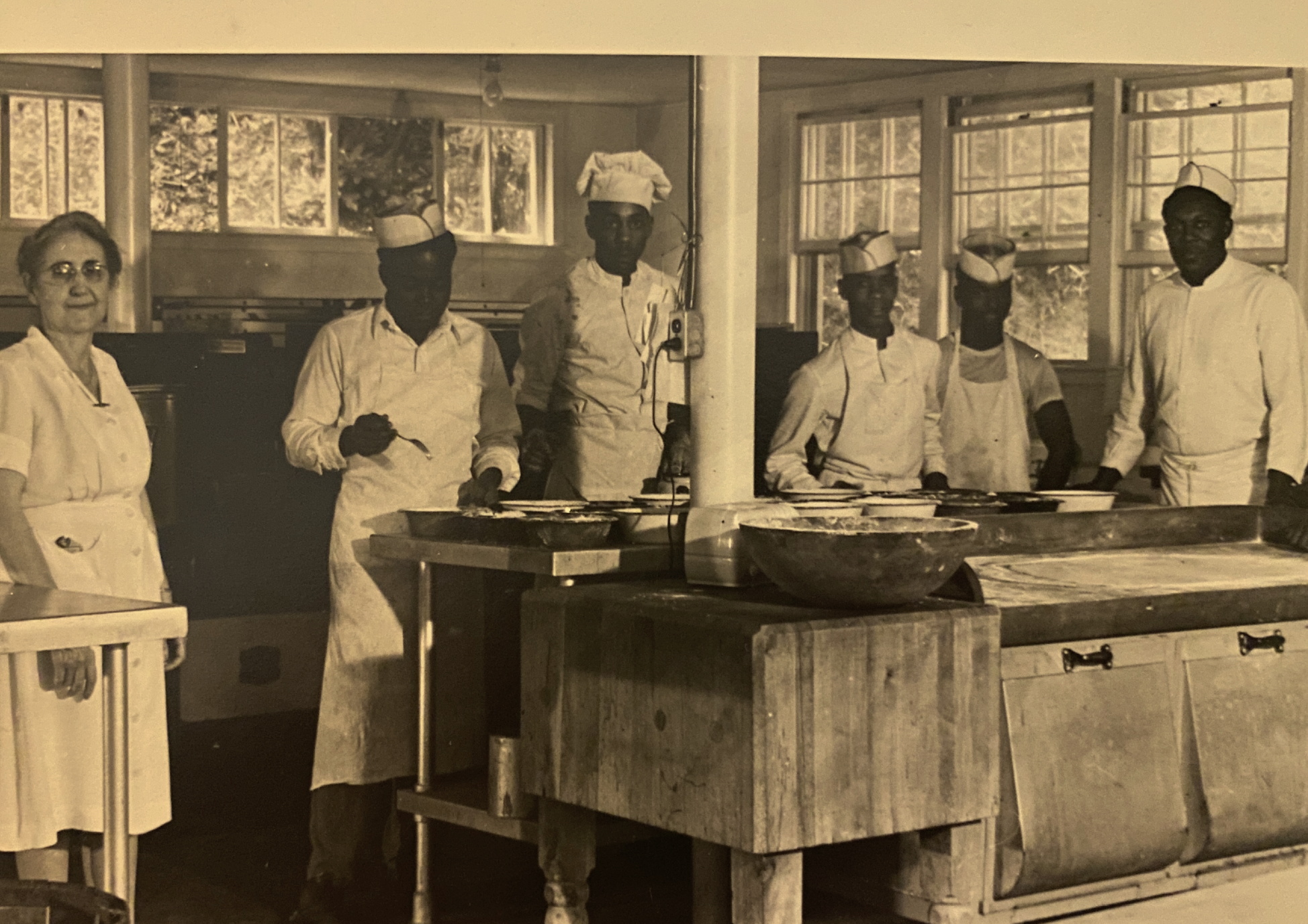
The kitchen staff at Camp Ton-A-Wandah (Flat Rock, NC) prepare a meal, c. 1950s. While camper populations at most camps during much of the 20th-century were all white, people of color could often be found in roles of service.
THREATS & ACTS OF VIOLENCE
In the South, including western North Carolina, running an interracial camp was dangerous. The Ku Klux Klan openly threatened camps hosting interracial programming, and raids on summer camps were reported throughout the 1920s–1960s.
INTERRACIAL CONFERENCES AT CAMP MERRIE-WOODE
Some camp directors in western North Carolina challenged racial boundaries. Camp Junaluska (Lake Junaluska, NC) accepted campers from Cuba, Haiti, and Armenia as early as 1930. Dammie Day, director of Camp Merrie-Woode (Sapphire, NC), agreed to host interracial conferences for the YWCA (Young Women’s Christian Association) at the camp during the 1930s–1940s in the weeks before the official camp session began. Aware of the risk, Day kept the information quiet in the local community. While Merrie-Woode pushed racial boundaries of the time by welcoming campers and staff of Asian and Pacific Island descent in the 1940s, no Black campers were admitted to Merrie-Woode until the latter part of the 20th-century.
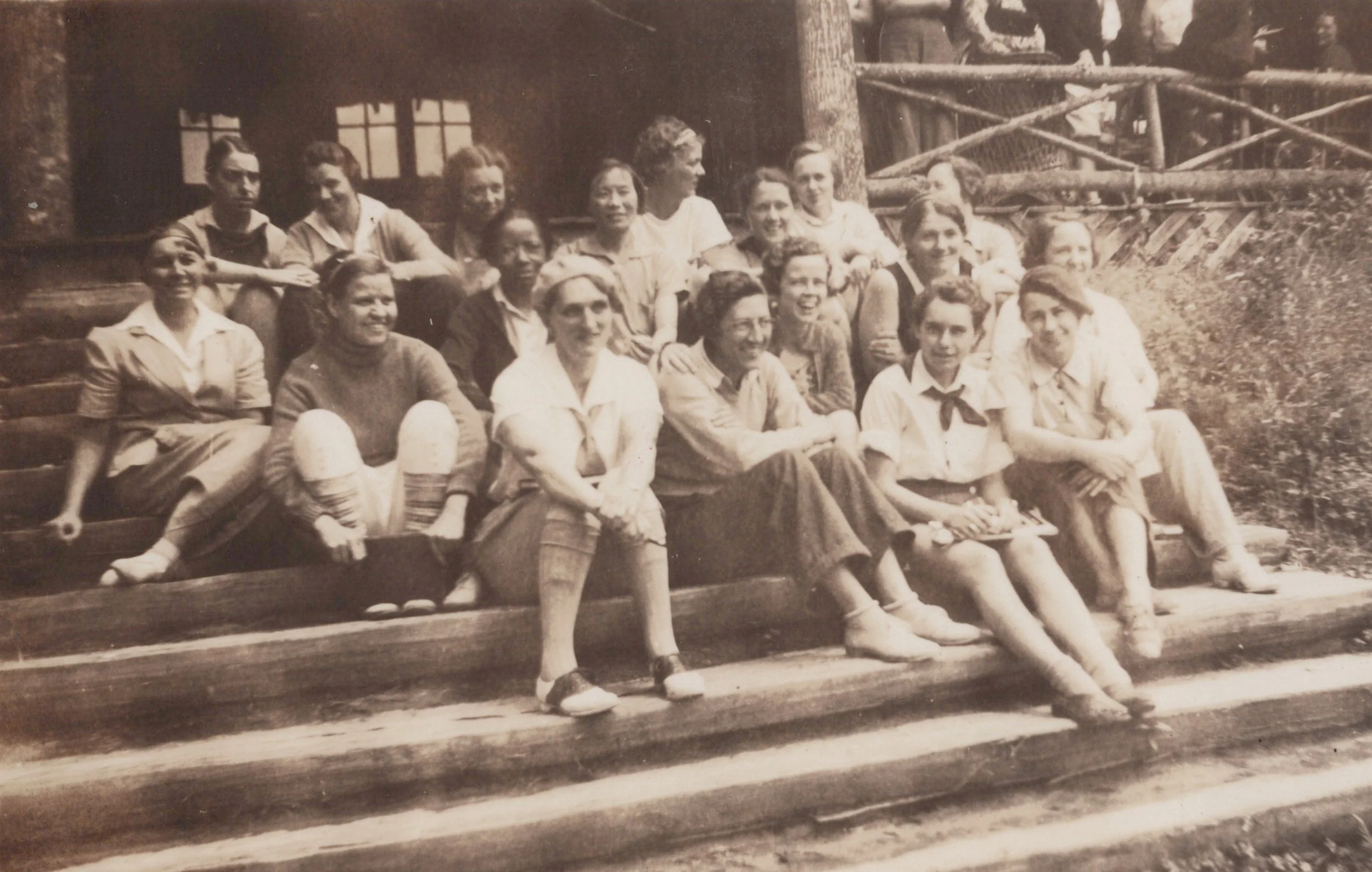
Young women attend an interracial YWCA conference at Camp Merrie-Woode (Sapphire, NC), c. 1940s. Cashiers Historical Society Collection
ATTACK ON SUMMERLANE
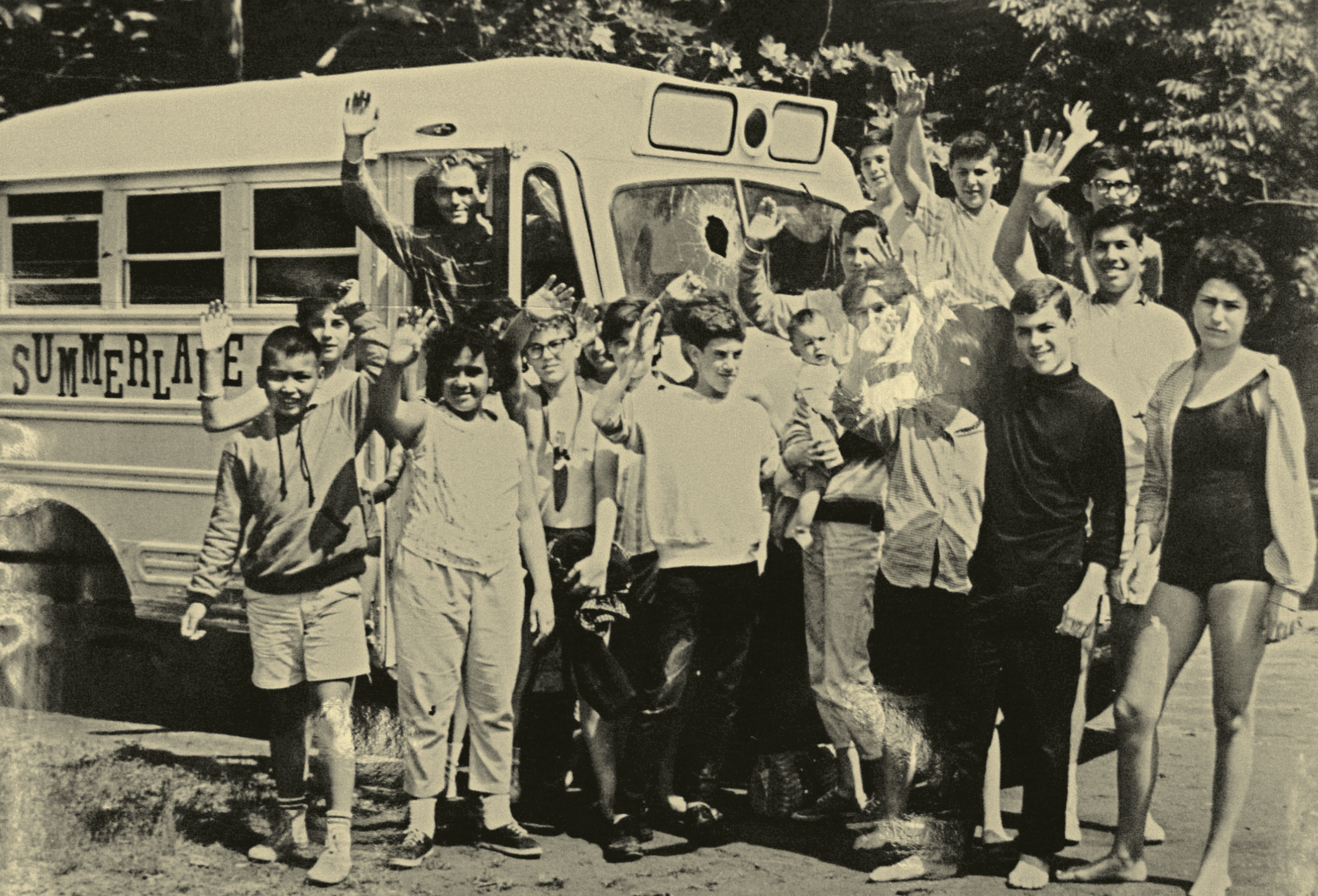
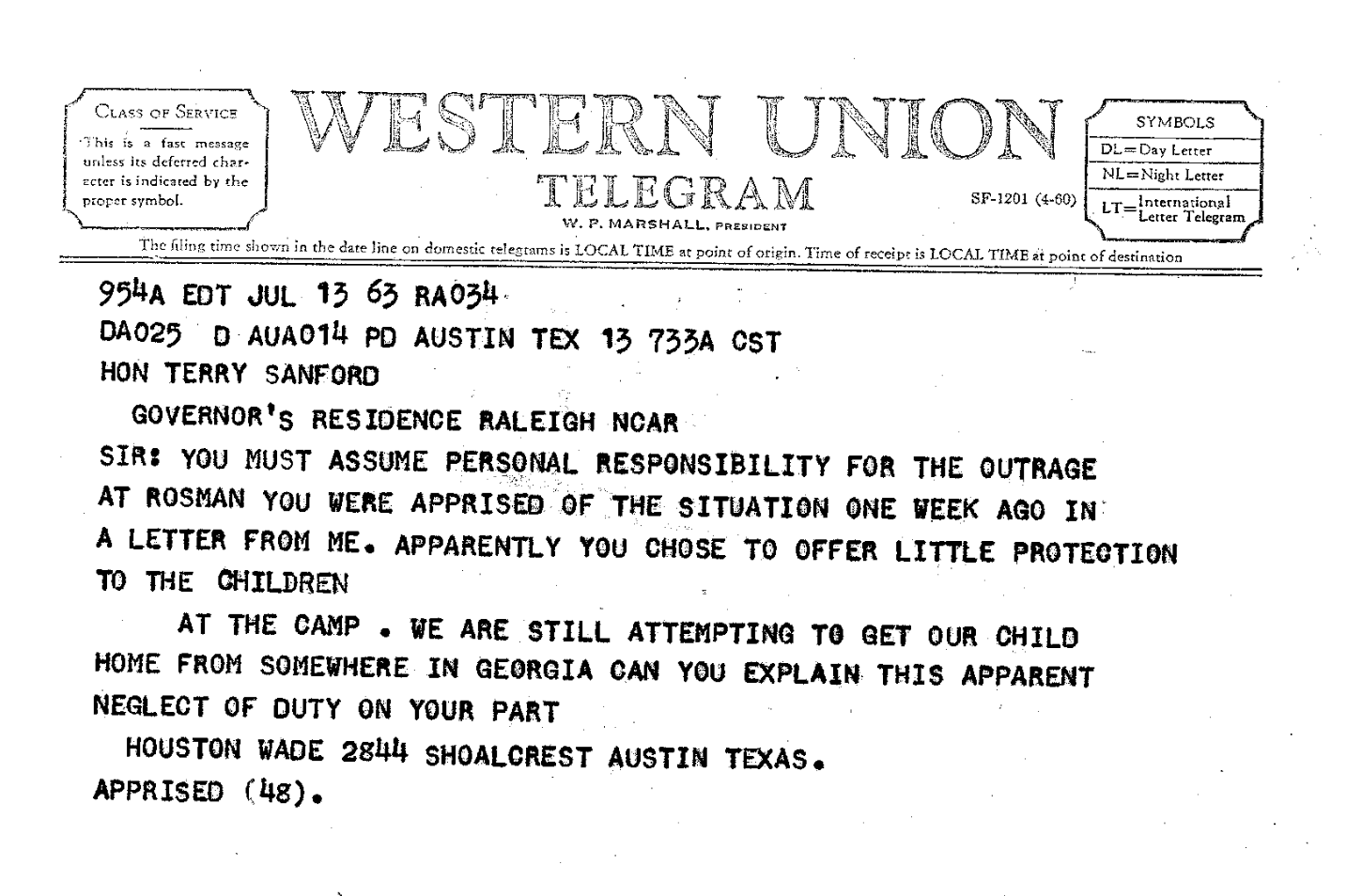
One of the most violent examples of resistance to integration in western North Carolina occurred on July 11, 1963, at Camp Summerlane (Rosman, NC). After announcing it would operate as an integrated camp, Summerlane received numerous threats. On the night of the attack, an armed mob poured gasoline into the lake and lit it on fire. They burned two buildings, beat campers and counselors, and shot out the window of a camp bus. Campers and staff evacuated in the early morning to a camp in New Jersey. Six weeks later, on August 28, 1963, approximately thirty Summerlane campers and staff attended the historic March on Washington and witnessed Martin Luther King Jr. give his historic "I Have a Dream" speech.
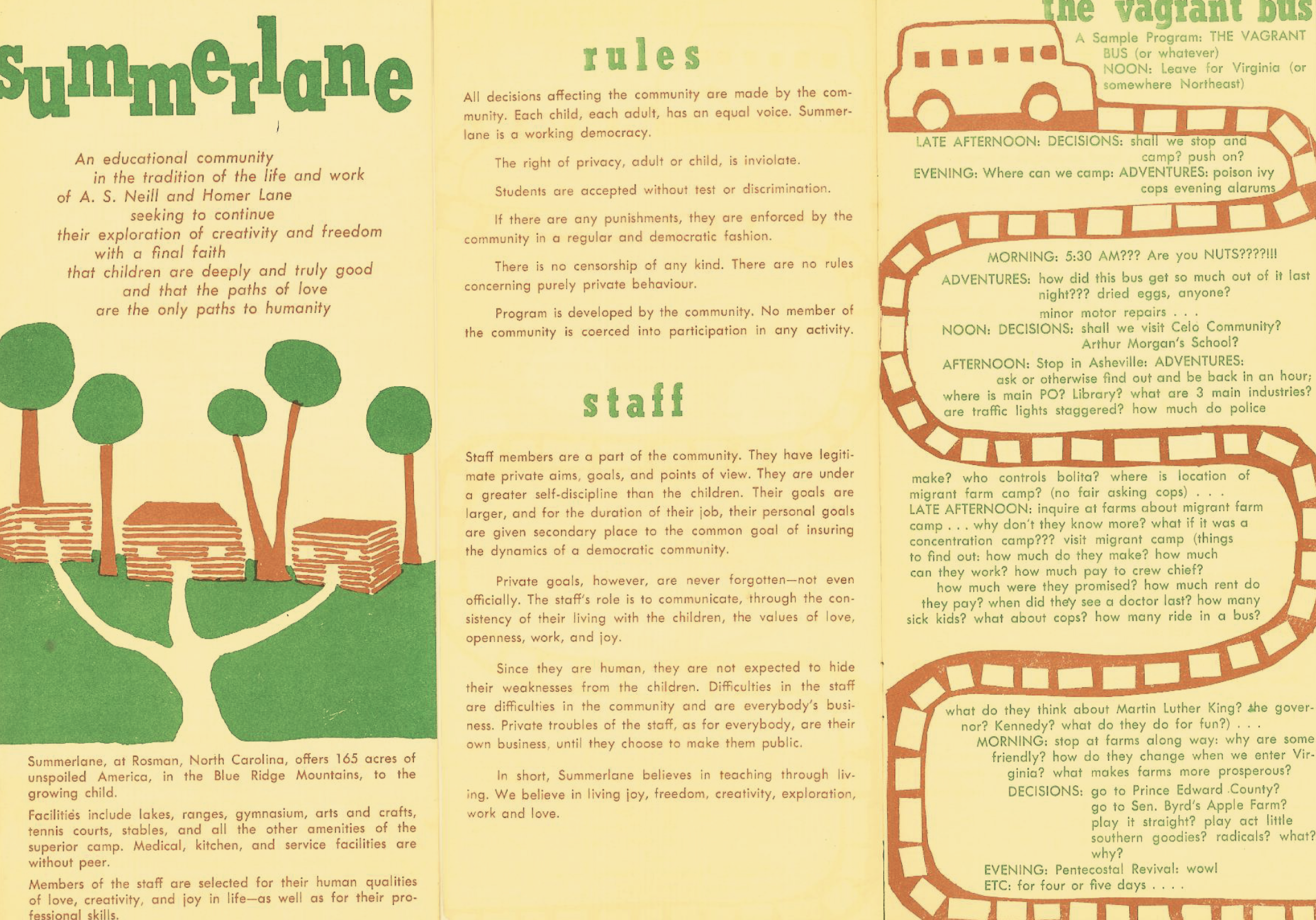
“I learned to live…with… different people and found out that…they were really no different than me at all. They were just people, and no one noticed whether they were black, white, Gentile or Jewish. Everyone was just friends.”
— An eighth-grade CAMPER, Camping Unlimited, C. 1975PUSH FOR INTEGRATION
“CAMPING UNLIMITED” AT BLUE STAR
From 1969 to 1976, Blue Star Camps (Hendersonville, NC) hosted a two-week pre-season program called “Camping Unlimited.” It relied on a volunteer leadership team and tuition scholarship sponsors. This coed interracial, multi-cultural camp session included Black, white, Native American, Hispanic, Asian, Jewish, Catholic, and Protestant children and staff. These campers enjoyed the same activities and daily routine as Blue Star’s regular session. Prominent civil rights activists, including Ralph Abernathy, Andrew Young, and Martin Luther King, Jr., sent their children to Camping Unlimited.
In 1976, the American Camp Association’s Eleanor P. Eells Award for Program Excellence was given to Blue Star Camps for Camping Unlimited. Founders Herman and Harry Popkin aimed to “clear the path” for other private camps to create similar programs. Leaders and parents of Camping Unlimited attempted to form an independent board to raise the funds to continue, but the effort failed. Without sufficient funding, Camping Unlimited ended after 1976, and the brothers’ vision for widely accepted interracial camp programs within their peer camps did not take off. The overnight camping industry failed to follow Blue Star’s lead, and it was not until the 1980s–1990s that many private camps began to accept Black campers.
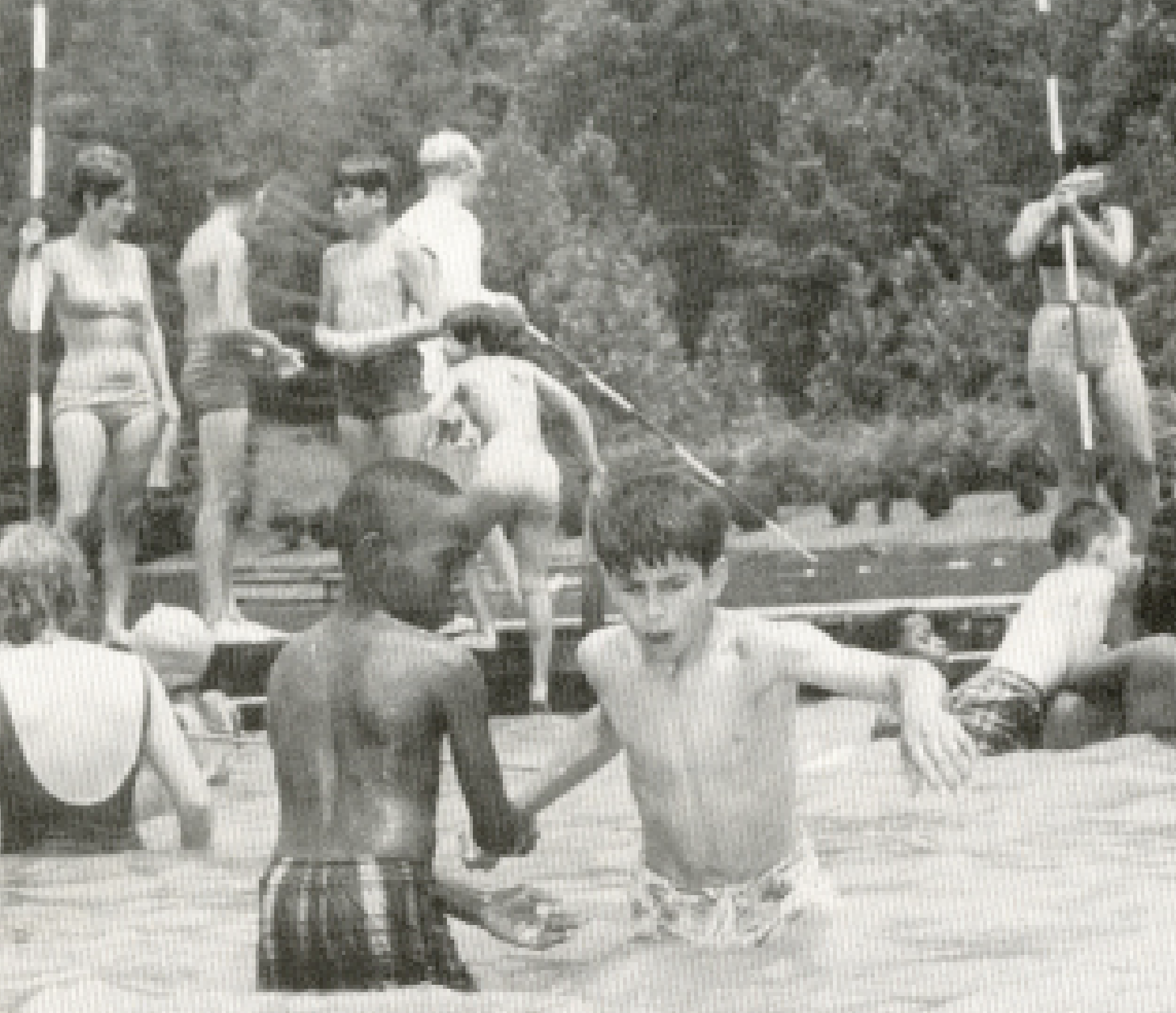
A Blue Star counselor recalled teaching a young Black boy to swim in the lake. His camp director asked him later if he knew who the boy was. The counselor knew him only by his first name, Dexter. The director replied, “His last name is King.” Martin Luther King, Jr. and Coretta Scott King’s children attended Camping Unlimited in 1971, just three years after their father’s assassination.
“Life is Getting Better,” filmed at Camp Blue Star’s (Hendersonville, NC) interracial and interfaith
“Camping Unlimited” program in the summer of 1970
CAMPS RECKON WITH CHANGE
The 1964 Civil Rights Act forced the issue of segregated camps into the national conversation and sparked a period of division within the camping industry. In 1970, the American Camping Association (ACA) officially adopted a non-discriminatory, interfaith, interracial policy. In response, over 100 ACA member camps resigned. Many would return over time, but camps could no longer ignore the issue of racial equity.
Today, many private camps are still reckoning with this history, as much of their white alumni base continues to make up the majority of current camper demographics. In a manufactured and insular space that has been historically white, camp leaders must ask: How do you open doors to more groups of people in meaningful ways?
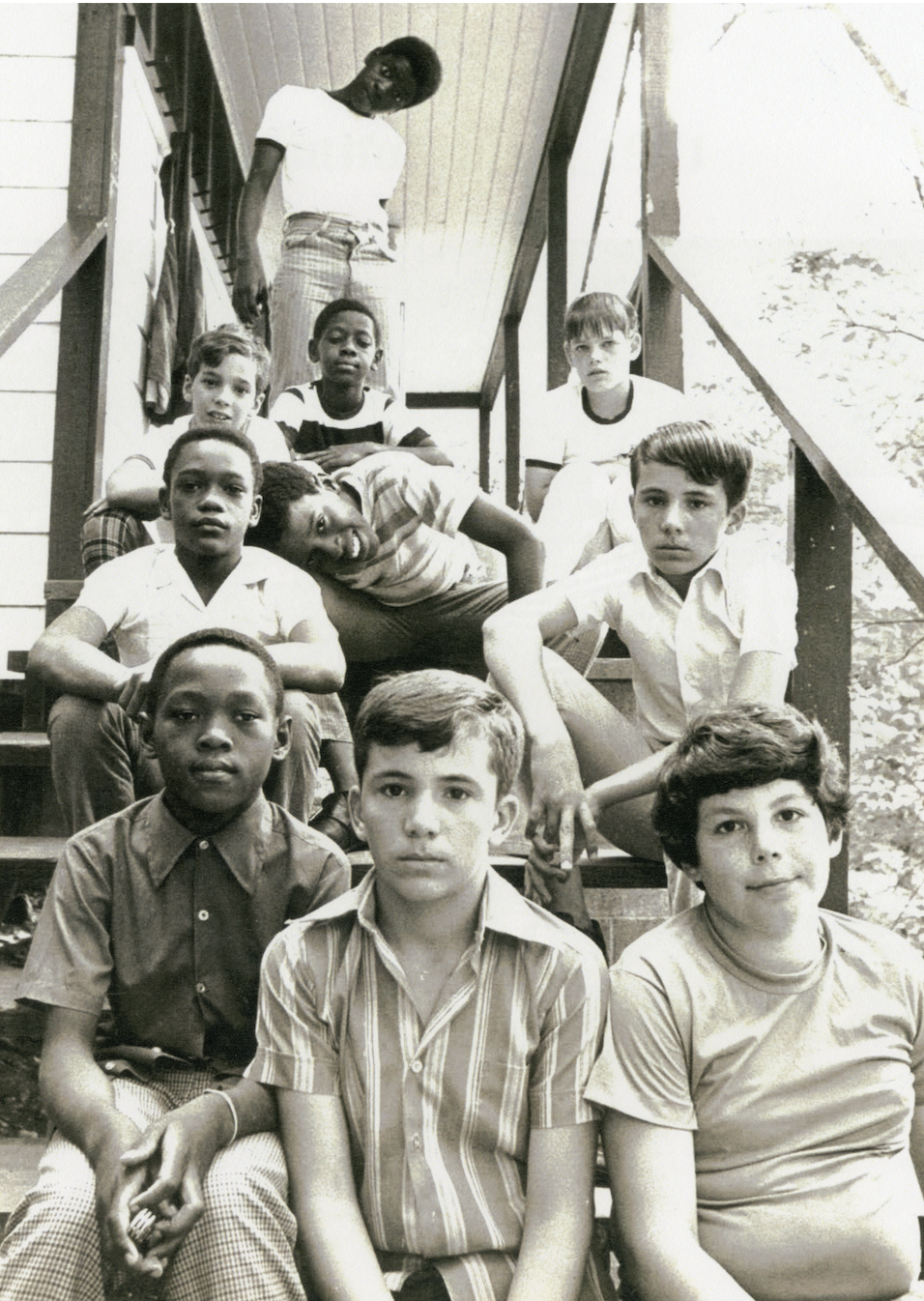
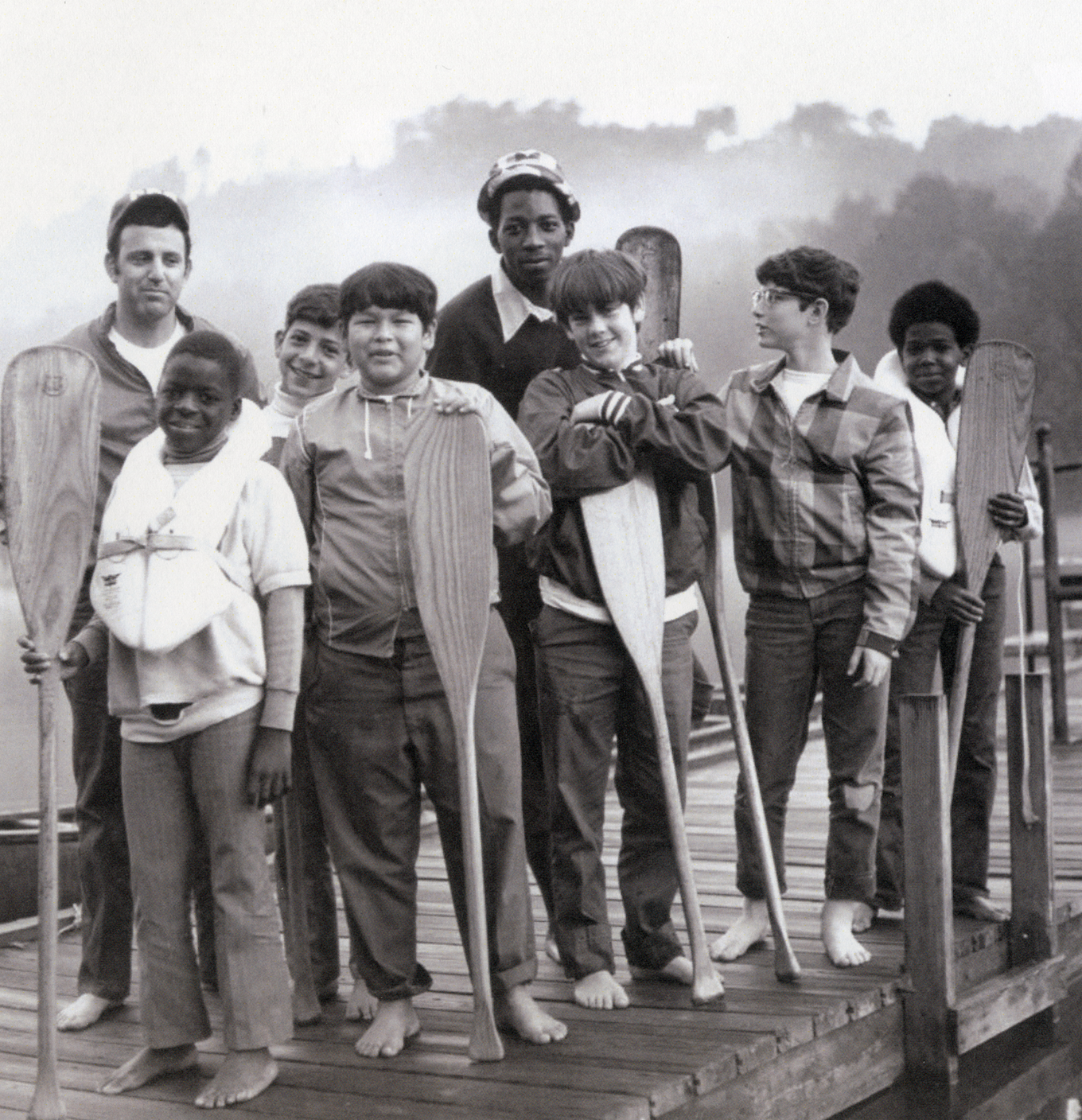
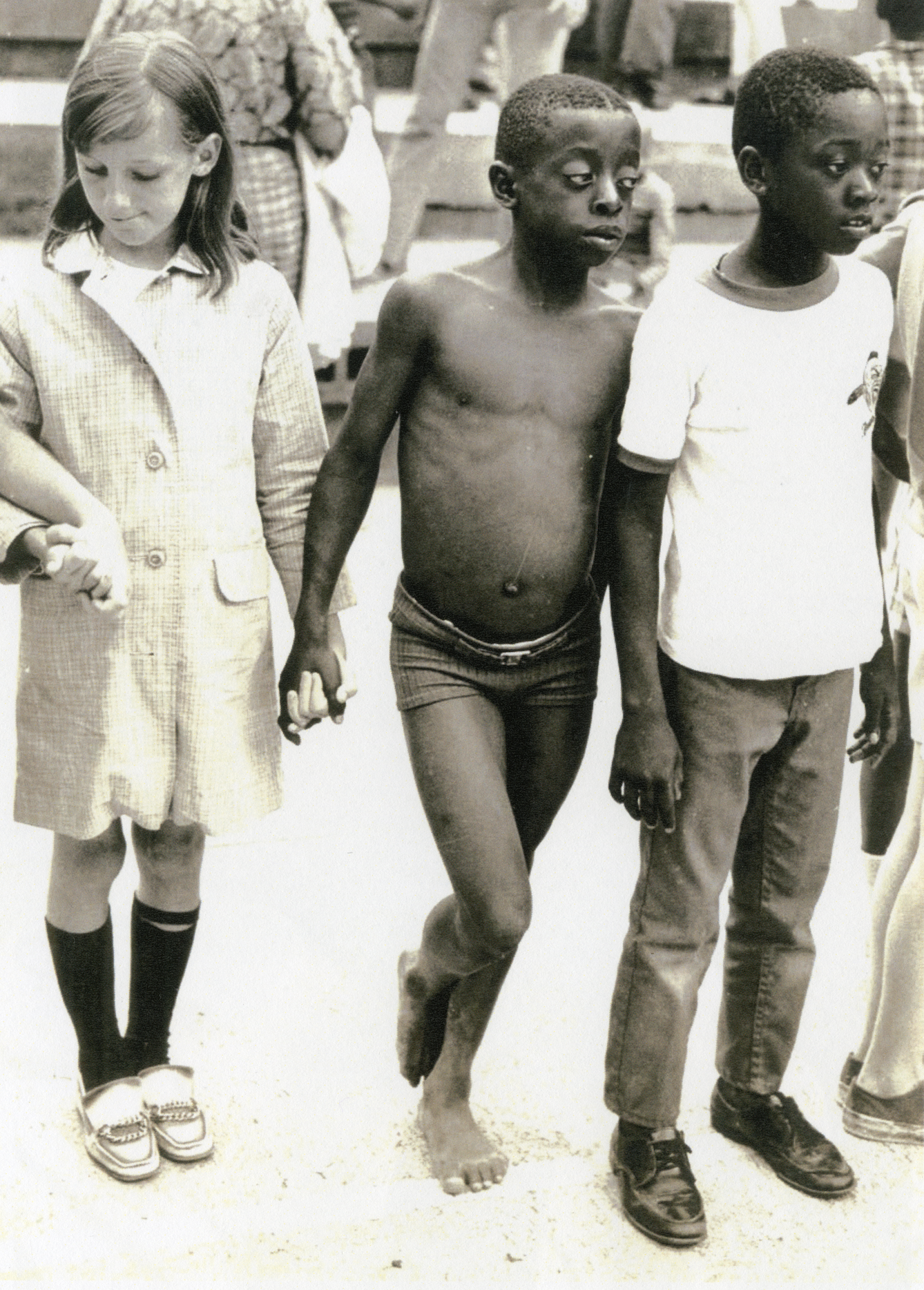
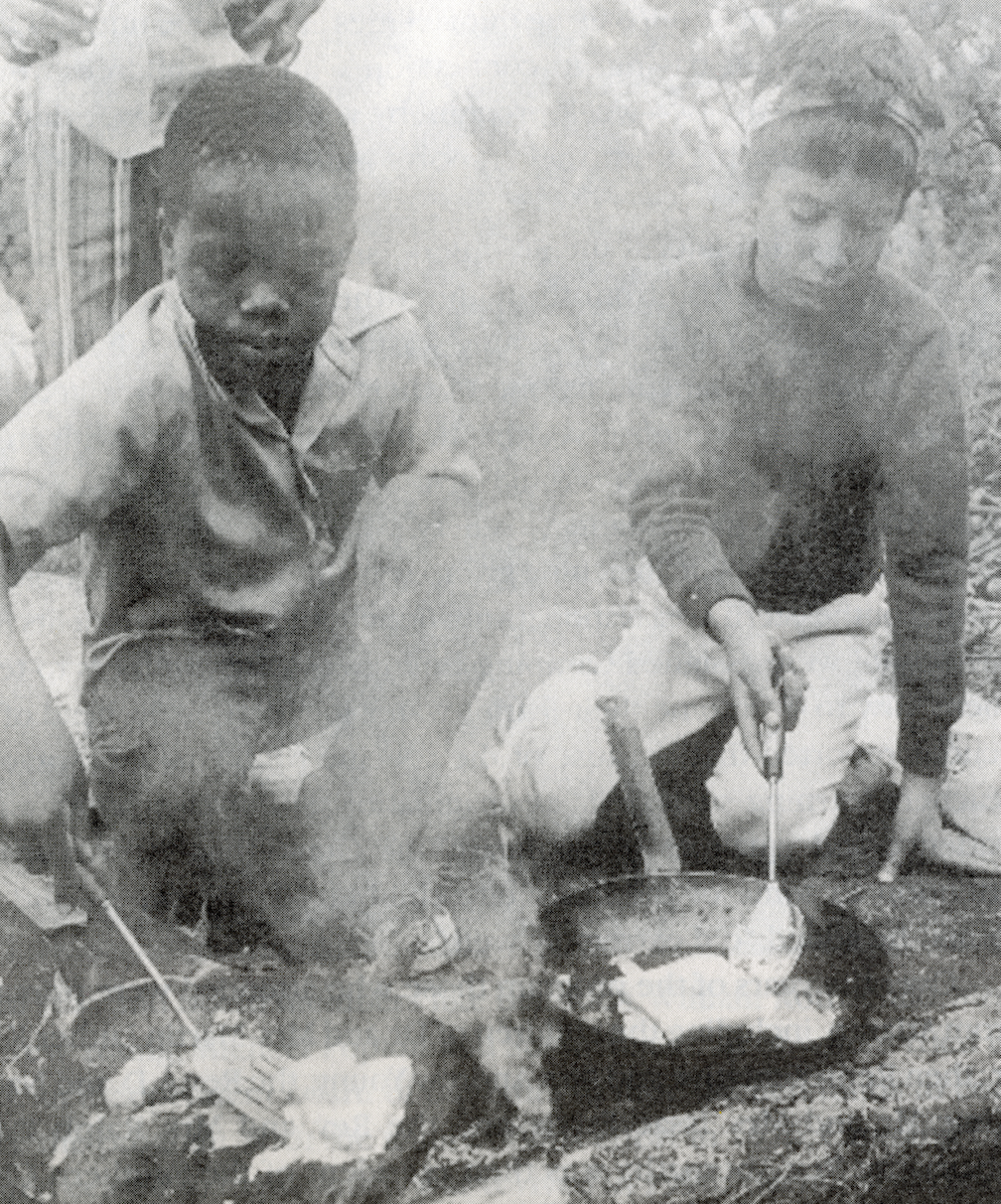

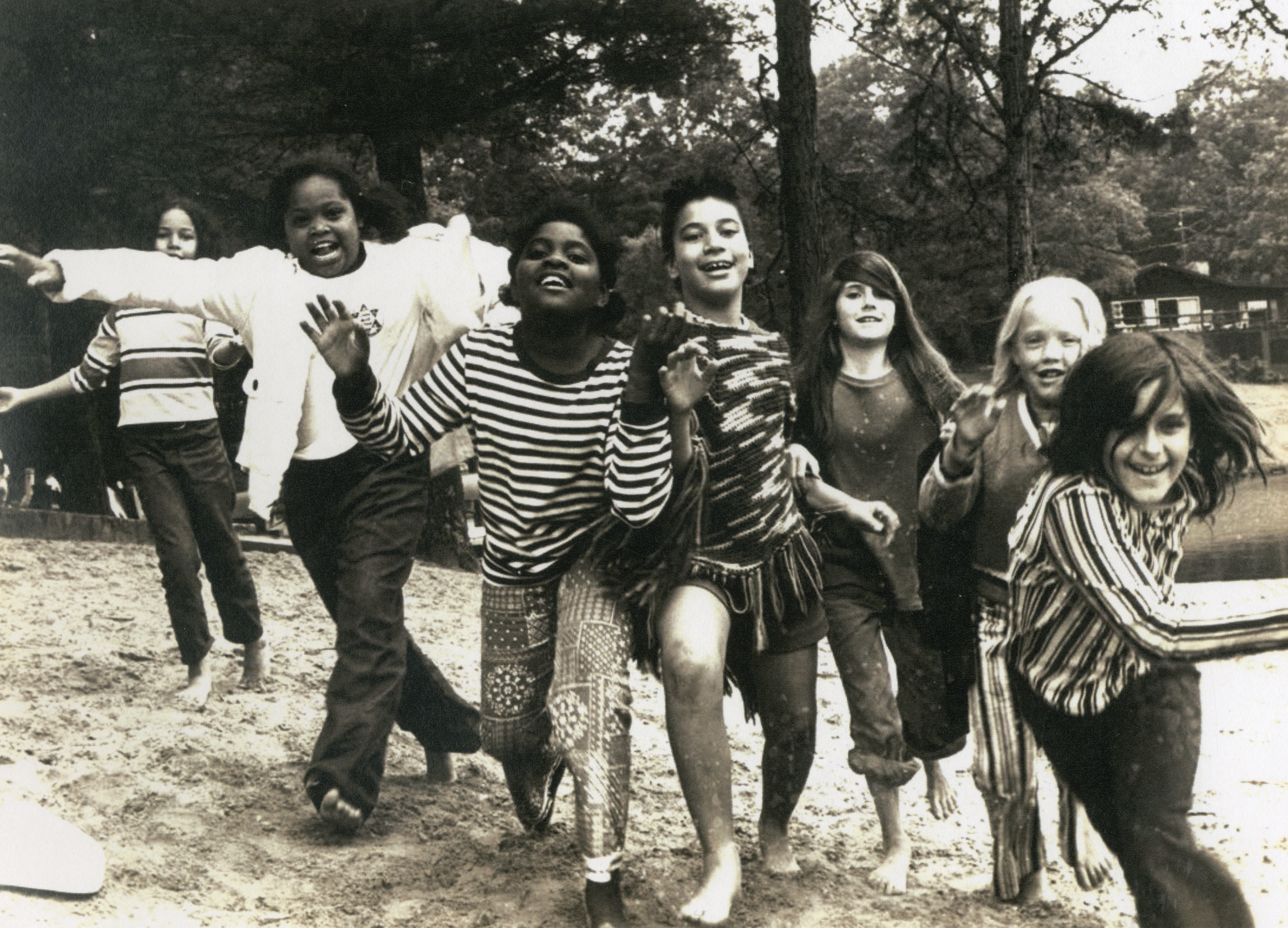
Camping Unlimited campers, c. 1971. Photos by Ken Solomon, “Beautiful Faces 1971”
THE GREAT CAMP RECESSION
RISING COSTS & FEWER CAMPERS
In the 1970s, summer camps across the United States were in decline. Some never reopened after closing during World War II. Others struggled under the weight of financial recession, declining enrollment, rising operational costs, and increasing regulations. Camps that had thrived in earlier decades now faced the challenge of redefining their place in a changing world.
Summer camps had lost its status as the premier summer experience. With a completed interstate highway system and the proliferation of commercial airlines, family vacations became more common, and many parents preferred to travel with their children rather than send them away for the entire summer.
In the 1970s and 1980s, many of the early camps in western North Carolina were nearing or over 50 years old. They needed building repairs and equipment upgrades. Additionally, the lands adjacent to camp properties were no longer untouched forests, as they had been when camps were founded in the early 1900s. Many camps faced the need to purchase additional property to protect their wilderness locations from encroaching development.
MULTIPLE & SHORTER CAMP SESSIONS
Many camps moved away from the traditional eight-week model and began offering shorter, more flexible sessions. Multiple sessions allowed camps to serve more families and generate more revenue while aligning with modern vacation patterns. Parents could send their child to camp for a few weeks and still plan a road trip or an overseas getaway.
As camps adapted to shorter sessions and shifting priorities, it became clear that the very nature of summer was evolving. This transformation would continue to influence the identity and operations of camps for decades.
What are your family’s summer priorities today? How long would you be willing to spend at an overnight camp?
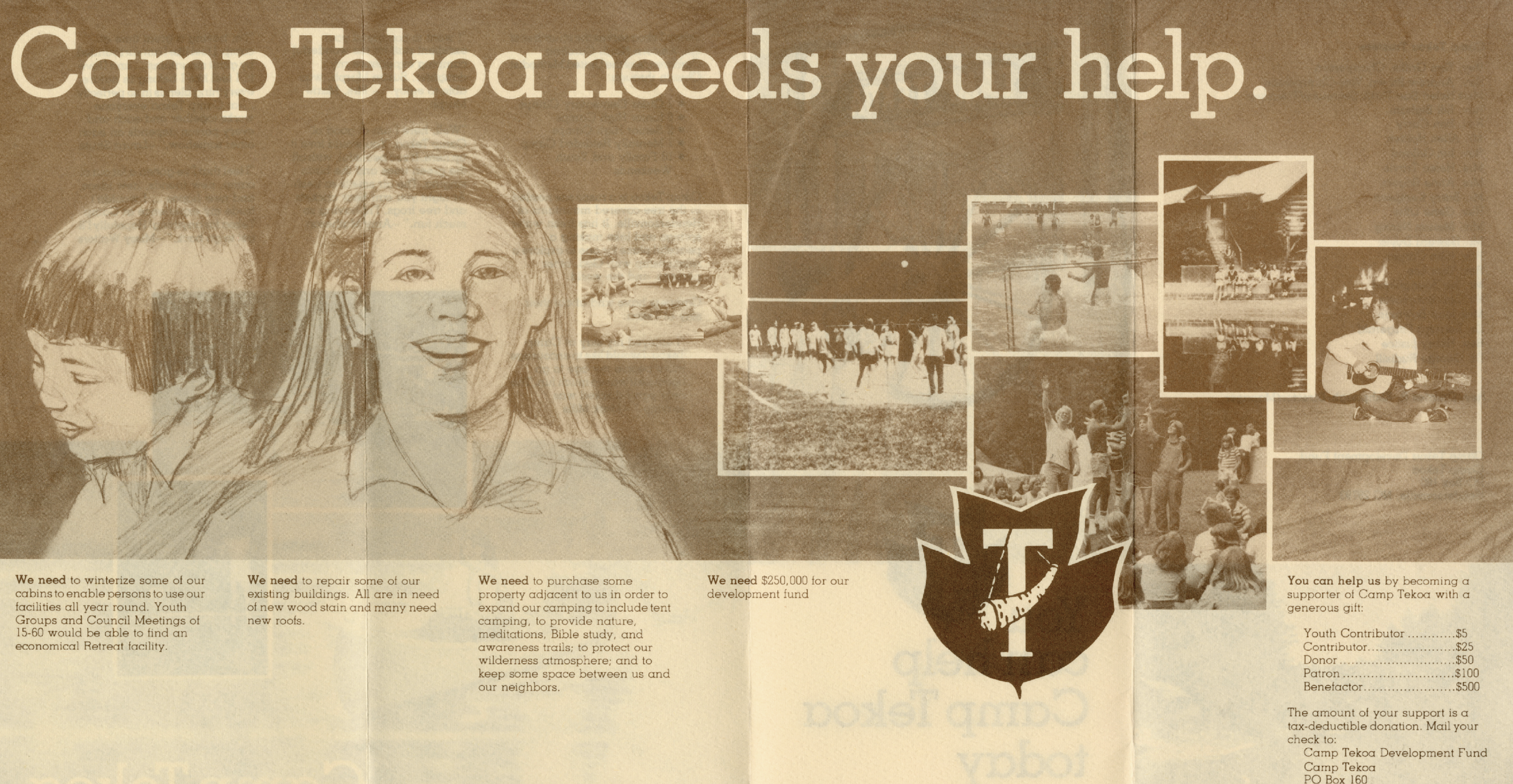
This 1980s fundraising campaign at Camp Tekoa (Hendersonville, NC) addressed many of the struggles facing camps in western North Carolina in the 1970s and 1980s, including facilities upgrades needs and encroaching development.
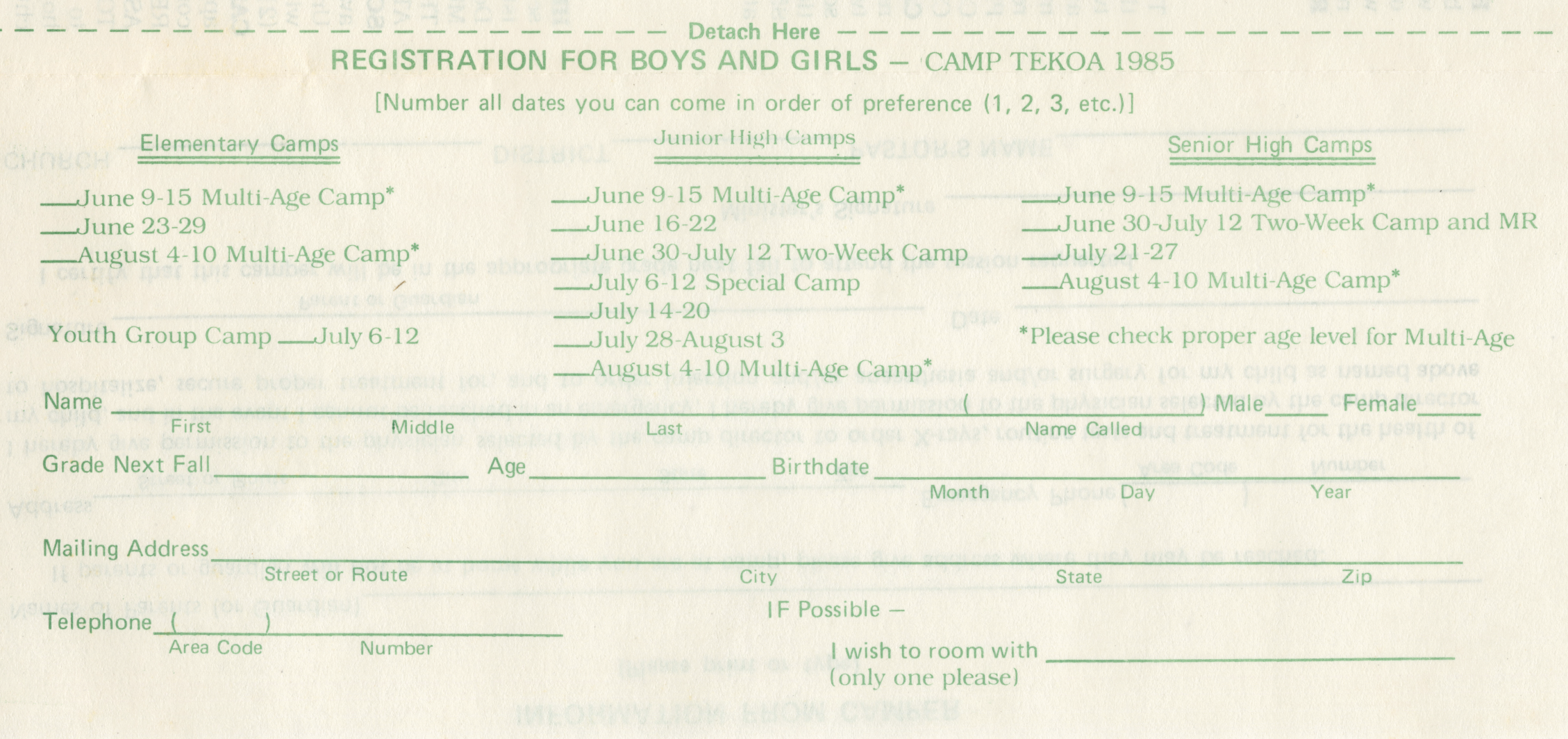
The 1985 camper application for Camp Tekoa (Hendersonville, NC) offered multiple short sessions.
INTRODUCTION • camp origins • CAMP evolutions • CAMP CULTURE • CAMP LIFE • MUSEUM GALLERYThis exhibit contains historical images, videos, and artifacts about minstrelsy and cultural appropriation. The materials displayed illustrate how summer camps utilized racist aspects of popular culture to shape their own insular worlds. These artifacts depict a painful moment in history and appear alongside important historical context in this exhibit.