

The Birth of the American Camping Movement
From the wilderness of New England to the mountains of North Carolina, how did the American summer camp grow from an experiment to a national movement?
TOPICS WE’LL EXLORE IN THIS SECTION:
INDUSTRIALIZATION + CAMPING BOOM + TOURISM + RAILROADS1861–1877: THE INDUSTRIALIZATION
OF AMERICA BIRTHS A MOVEMENT
FROM CITY STREETS TO COUNTRY RETREATS
By the late 1800s, cities were growing rapidly. At the same time, psychologists led by G. Stanley Hall began studying the development of children. Hall argued that urbanization threatened children’s mental wellbeing, and they needed experiences away from adults to mature into responsible citizens.
Hall and many men in the late Victorian Era believed that time in nature could toughen white, middle-class boys who had become emasculated by city life and reconnect them to a rugged, pioneer masculinity.
Meanwhile, urban educators noted that summer break from school created learning gaps and opportunities for children to get into trouble. In response, educators in New York City began the Fresh Air Fund in 1877, sending underprivileged children to live with host families in rural New England for two weeks during the summer. While not a camp, the initiative emphasized the same ideal: children benefit from fresh air, open space, and time away from city life.
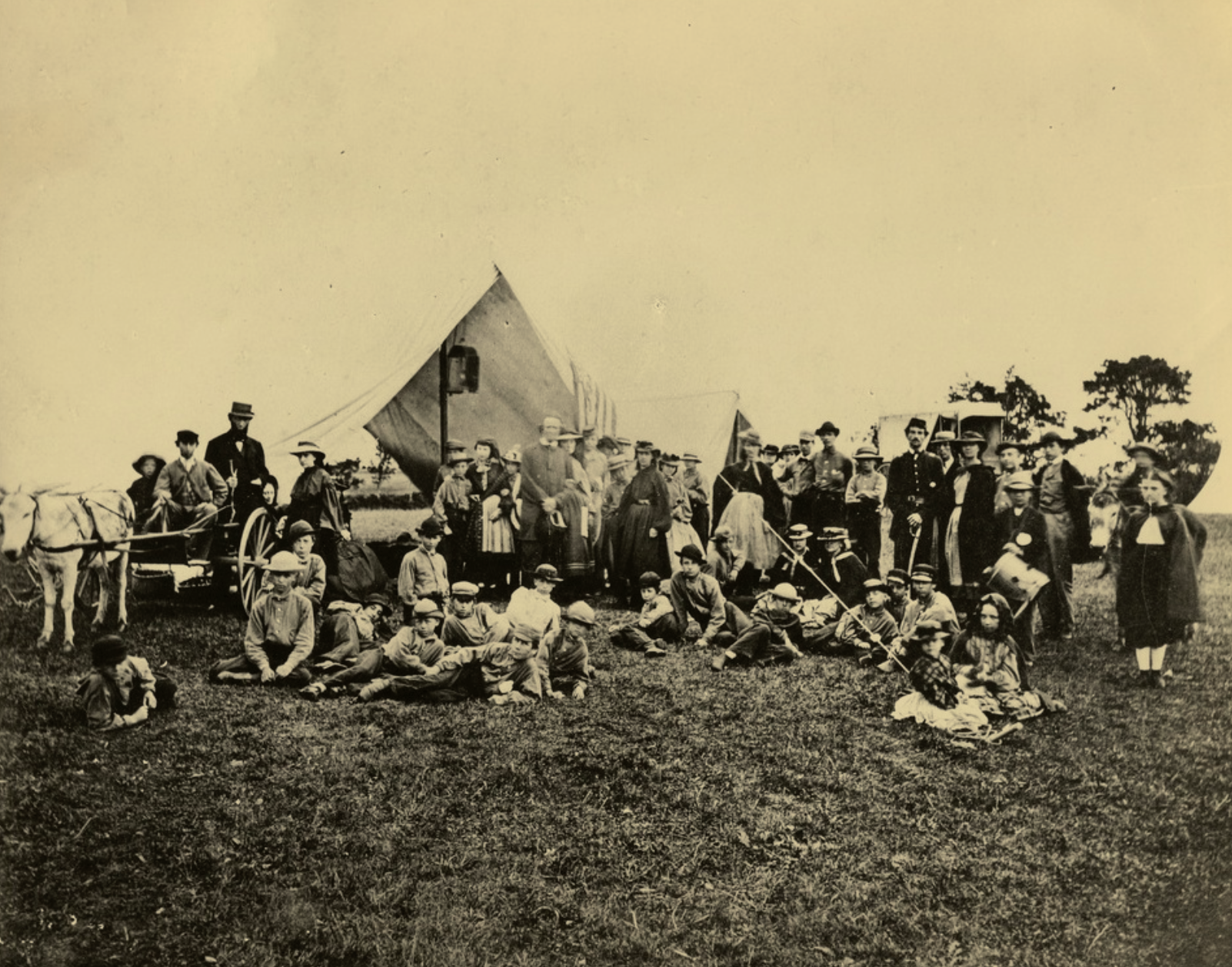
The first organized summer camp in the United States was established in 1861 by Frederick William Gunn, headmaster of the Gunnery School in Connecticut. Gunn, along with his wife, took the boys on a two-week trip to Welch’s Point on Long Island Sound. They camped, swam, fished, sang, and told stories around the campfire at night.
“Too much house…Civilization has been making of the world a hothouse. Man’s instinct of self-preservation rebels; hence the appeal for the return to the simple life that is growing loud…that tell plainly what we have been trying to hide and excuse with long pleas for the educational value of play, namely, that the boy is a young animal, that needs to grow a sound body...”
— Jacob Riis, Author, Journalist, and Photographer, 1906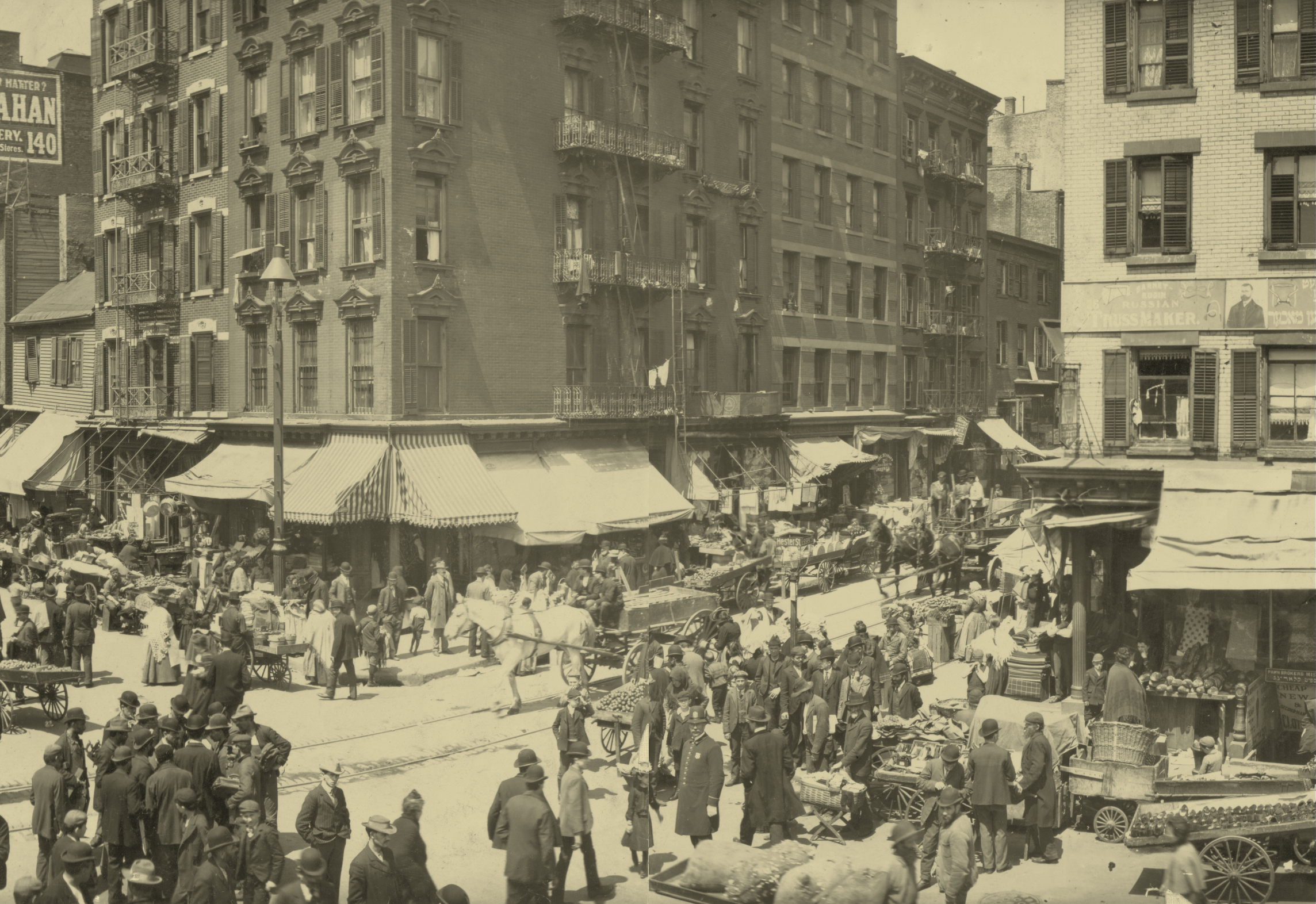
New York City, c. 1902; Photo courtesy of Library of Congress
August 1893, “A Boys’ Republic: The Story of Camp Chocorua,”
by Alfred Balch
1881–1918: CAMPING BOOM IN NEW ENGLAND
THE DAWN OF AMERICAN SUMMER CAMPS
In 1881, Camp Chocorua opened in New Hampshire as the first camp unaffiliated with a school. Founded by Ernest Balch, it embraced a romanticized, pioneer lifestyle. Other camps soon followed in the same model.
In 1892, Camp Arey in Arey, New York became the first camp to admit girls, before transitioning to an all-girl camp by 1902. The same year, other girls’ camps opened, including Camp Pinelands and Wyonegonic Camp in Maine and Camp Kehonka in New Hampshire. Kehonka’s founder, Laura Mattoon, was a fierce advocate for girls’ outdoor education.
By 1910, around 100 private camps were scattered across New England. That year, the Camp Directors’ Association of America formed. Women camp directors created their own organization in 1916, The National Association of Directors of Girls Camps. These organizations merged in 1924 as the Camp Directors Association, now known as the American Camp Association (ACA).
In 1918, there were over 1,000 camps established in the United States, mostly located in the Northeast. The summer camp boom had arrived in New England and would soon begin making its way south.
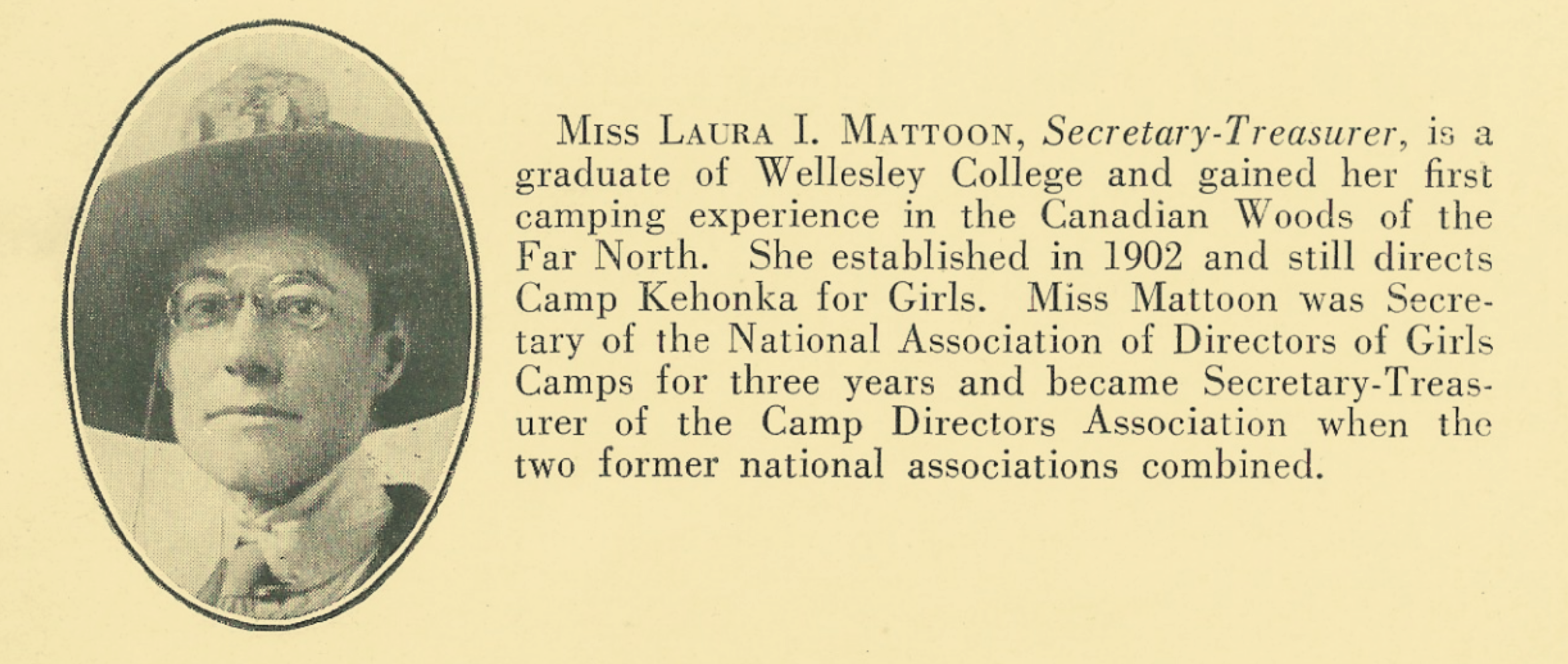
Laura Mattoon, a camp director and early advocate for girls camps, listed in
“Camps and Camping” Magazine, the official publication of the camp directors association, 1922
“Camps for boys are springing up like mushrooms. Literally thousands of boys who have…wasted the glorious summer time loafing on the city streets…are now living during the vacation time under nature’s canopy…and absorbing…that vitality which only pure air, sunshine, long hours of sleep, wholesome food, and reasonable discipline can supply.”
— H.W. Gibson, “Camping For Boys,” 1911 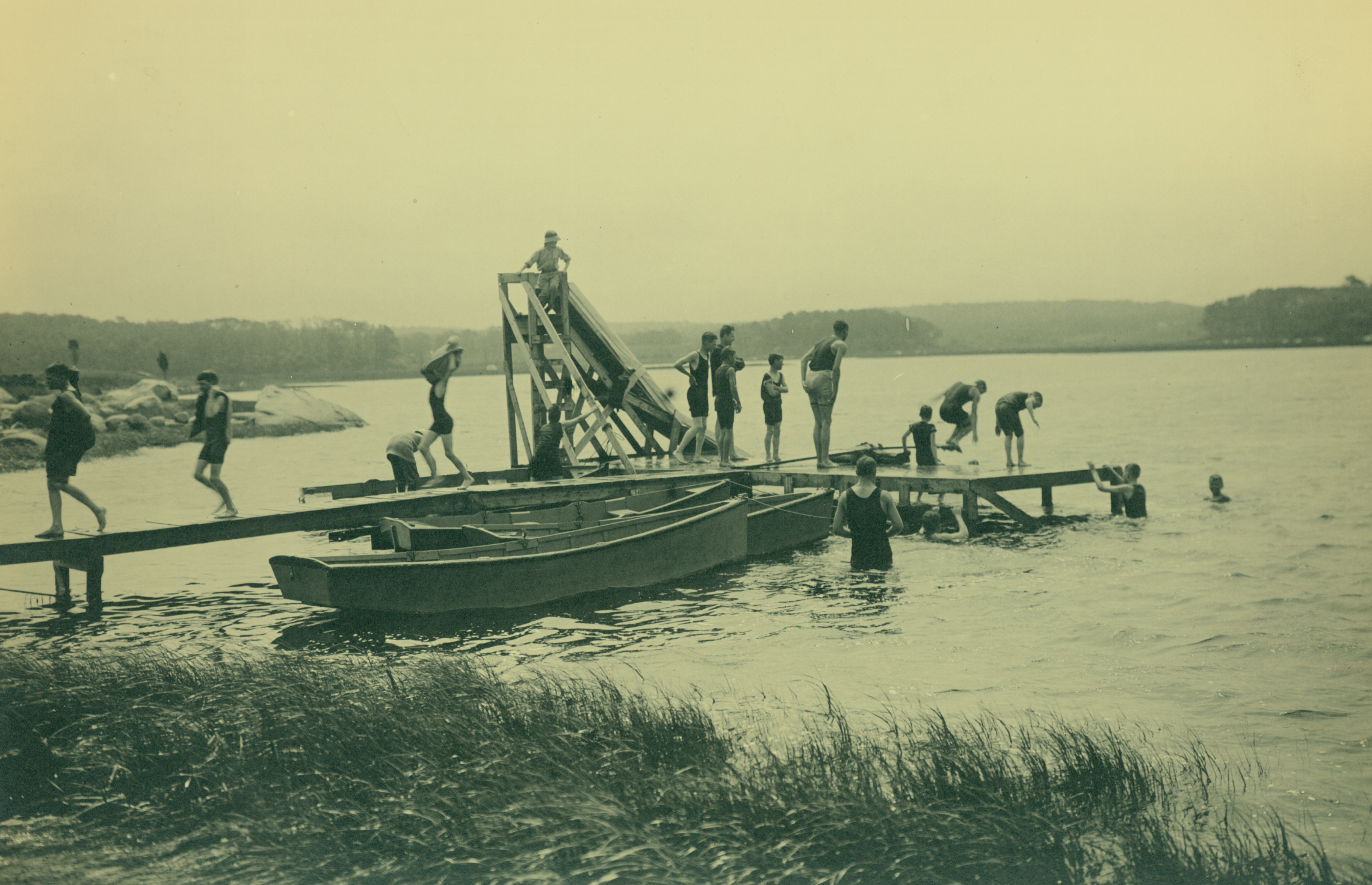
Swimming hour at Camp Wampanog (Buzzards Bay, MA), c. early 20th century; Photo courtesy of Historic New England
1911–1920: LANDSCAPE, RAILROADS,
& TOURISM LEAD CAMPS TO WNC
WHAT MADE WNC THE PERFECT SPOT FOR SUMMER CAMPS?
Because the camping movement originated in the Northeast where camps dotted the New England Appalachians, the camp ideal became a forested wilderness with access to a lake or body of water. However, such sites were harder to come by in the South, where most land outside of cities was active farmlands, and many waterways were industrial sites.
The North Carolina mountains, however, had remained largely untouched, thanks to the heavily forested hills and deep valleys that were not well suited to an agricultural economy. With its cooler climate, it became a popular summer destination for southern families looking to escape the heat, humidity, and disease of urban areas. For those hoping to establish summer camps, the area offered locations that were not in immediate danger of development while also providing a sense of wilderness.
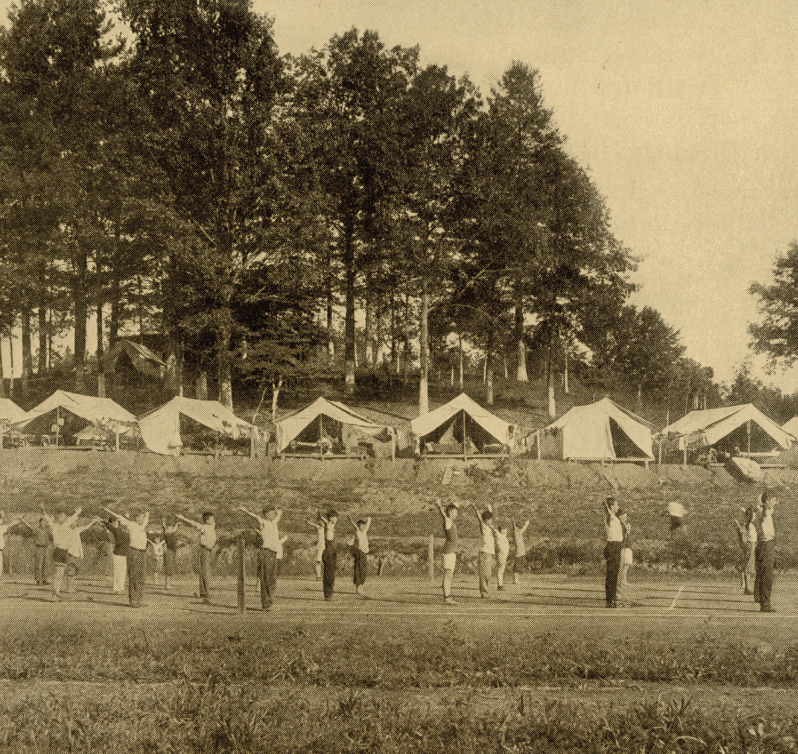
French Broad Camp (Brevard, NC), c. 1914

Camp promotional booklet printed by the
Asheville Chamber of Commerce, c. 1930s
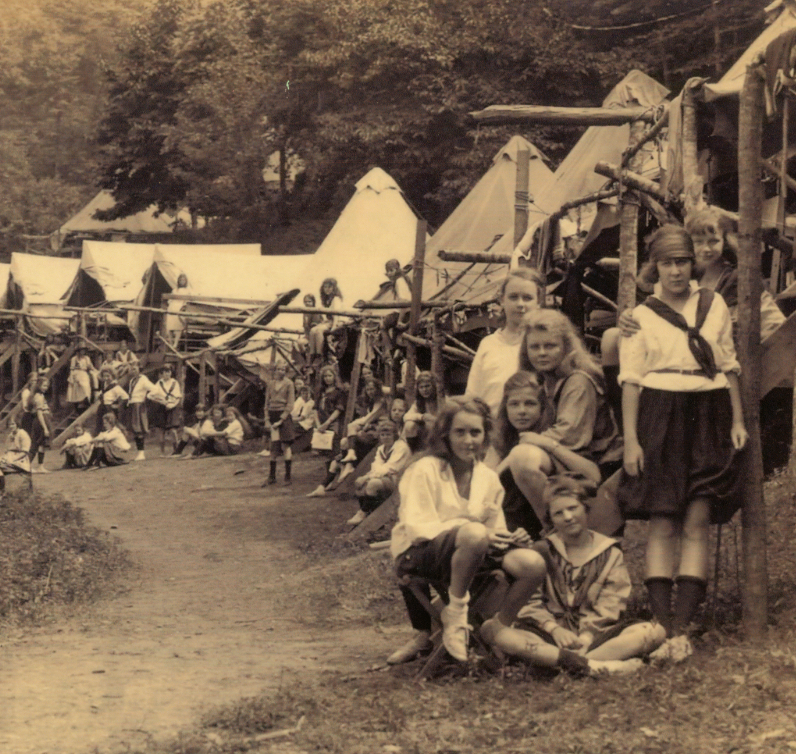
Keystone Camp (Brevard, NC), c. 1917
“The densest camp group [in the South] is in western North Carolina, a very picturesque region…There are about forty organized camps within seventy miles of Asheville…Southern camps will rapidly multiply now that so many well organized groups are prospering.”
— Henry Wellington Wack, “More About Summer Camps,” 1926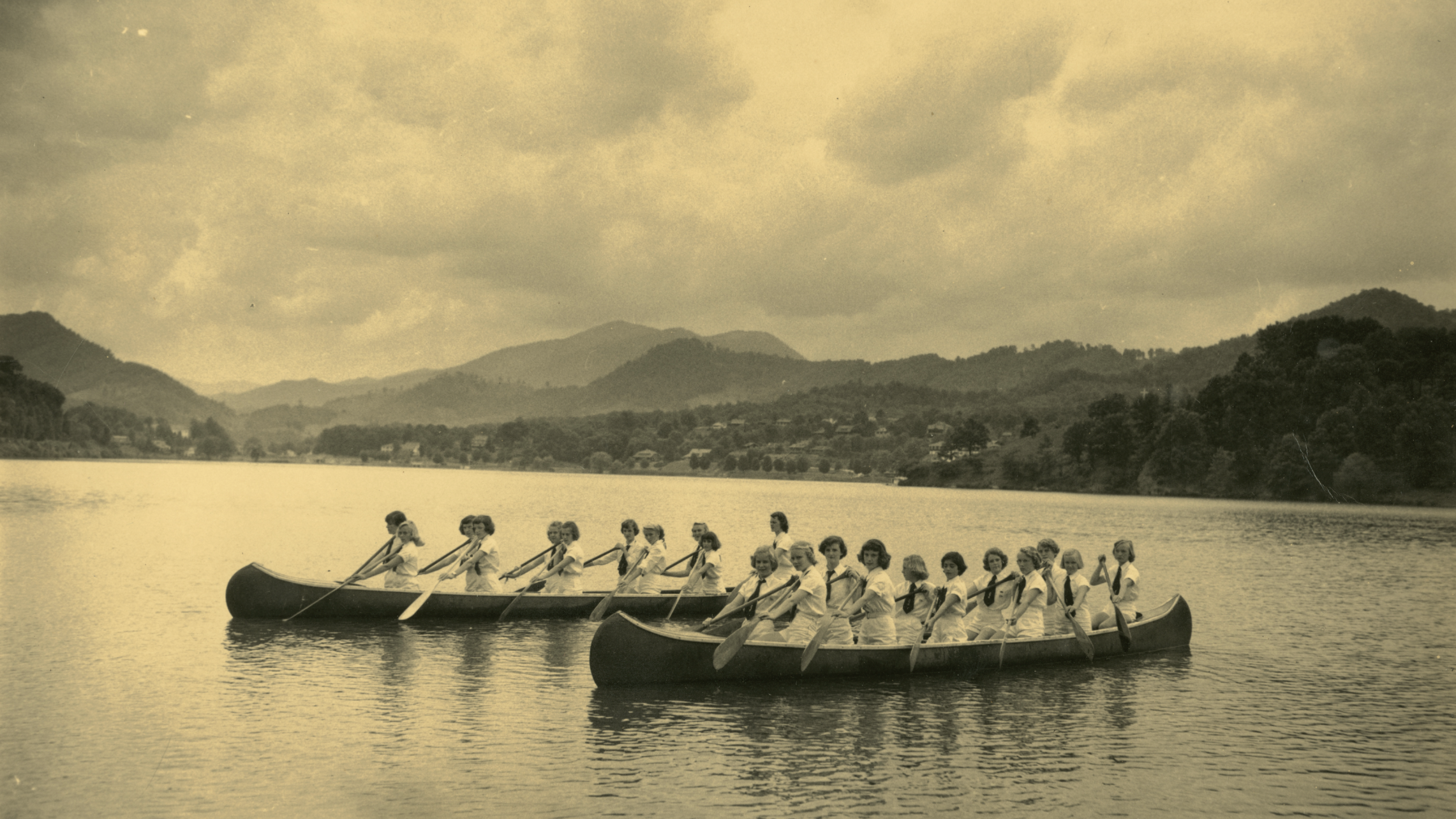
Camp Junaluska (Lake Junaluska, NC), c. 1950
CONNECTING PEOPLE TO THE MOUNTAINS
THE RAILROAD IN WESTERN NORTH CAROLINA
Many of the early camps established in western North Carolina were located near towns that were accessible by railroad lines. In 1895, northern investors established the Toxaway Company with a goal of building resort hotels in western North Carolina. The emergence of these resorts prompted the Southern Railway to extend the rail line from Asheville further into the mountains, with stops in Brevard in 1895, Hendersonville in 1896, and Toxaway in 1903. When the Southern Railway company extended its rail lines into the mountains, travel and tourism in the region opened to a wider group of people.
Tourists from southern cities like Atlanta, Savannah, Charleston, and New Orleans came to the mountainside lakes of North Carolina, looking to escape the summer heat. Parents wanted their children to be occupied during their stay, and summer camps offered a prime solution. By the late 1910s, summer camps were located within close range of many resorts. On Lake Fairfield in Sapphire, NC, the Fairfield Inn welcomed guests on the south side of the lake while Camp Merrie-Woode, a summer camp for girls, operated on the northwest shore beginning in 1919. E.H. Jennings, owner of the Inn and a Toxaway Company shareholder, used the camp as a marketing device for the Fairfield Inn.
The train ride to camp was a communal experience. Some camps arranged for counselors from common cities to travel with groups of campers to chaperone the trips to and from camp. Camp trucks, buses, or cars would meet the arriving groups at the nearest station to transport them to camp.
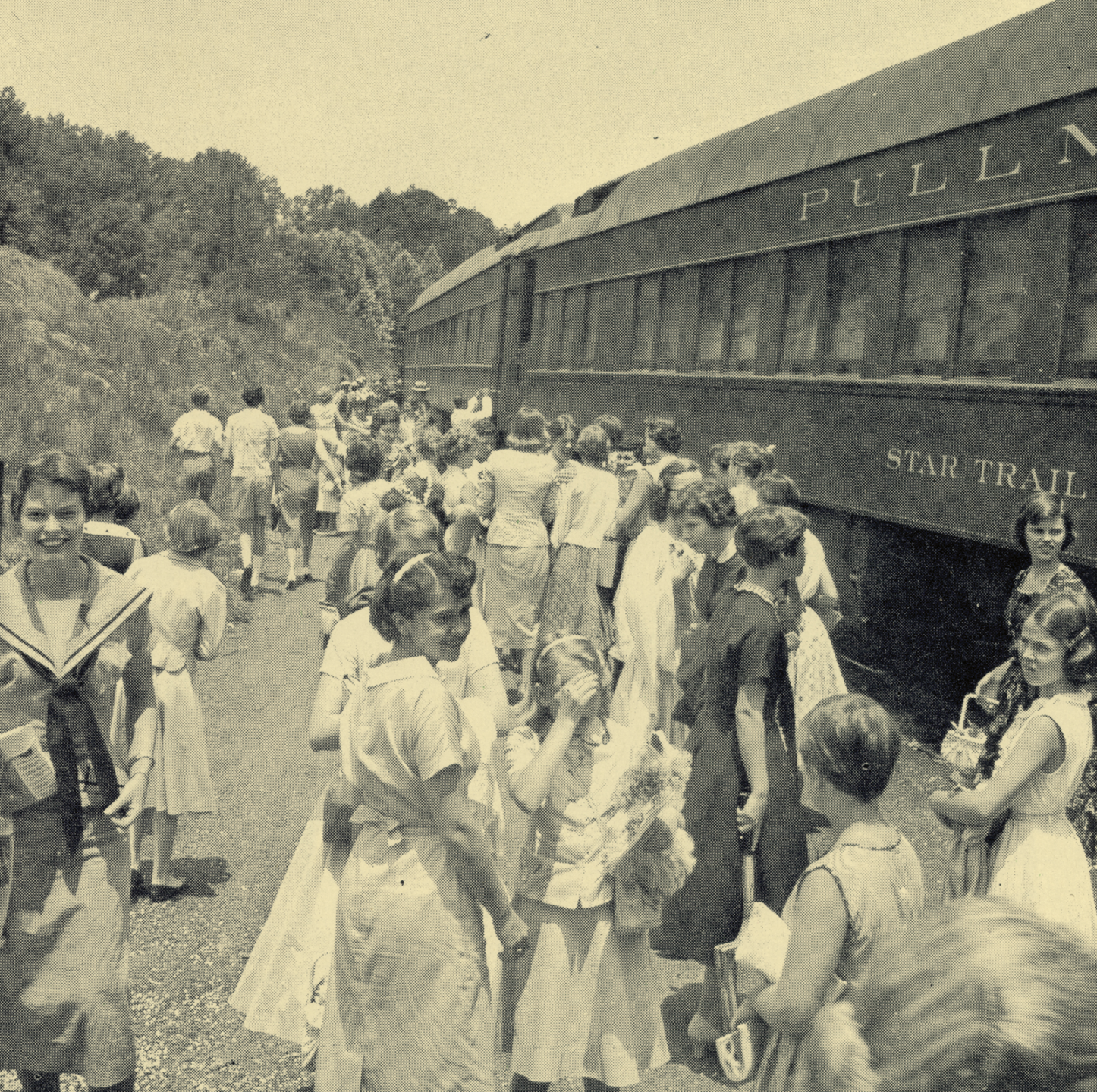
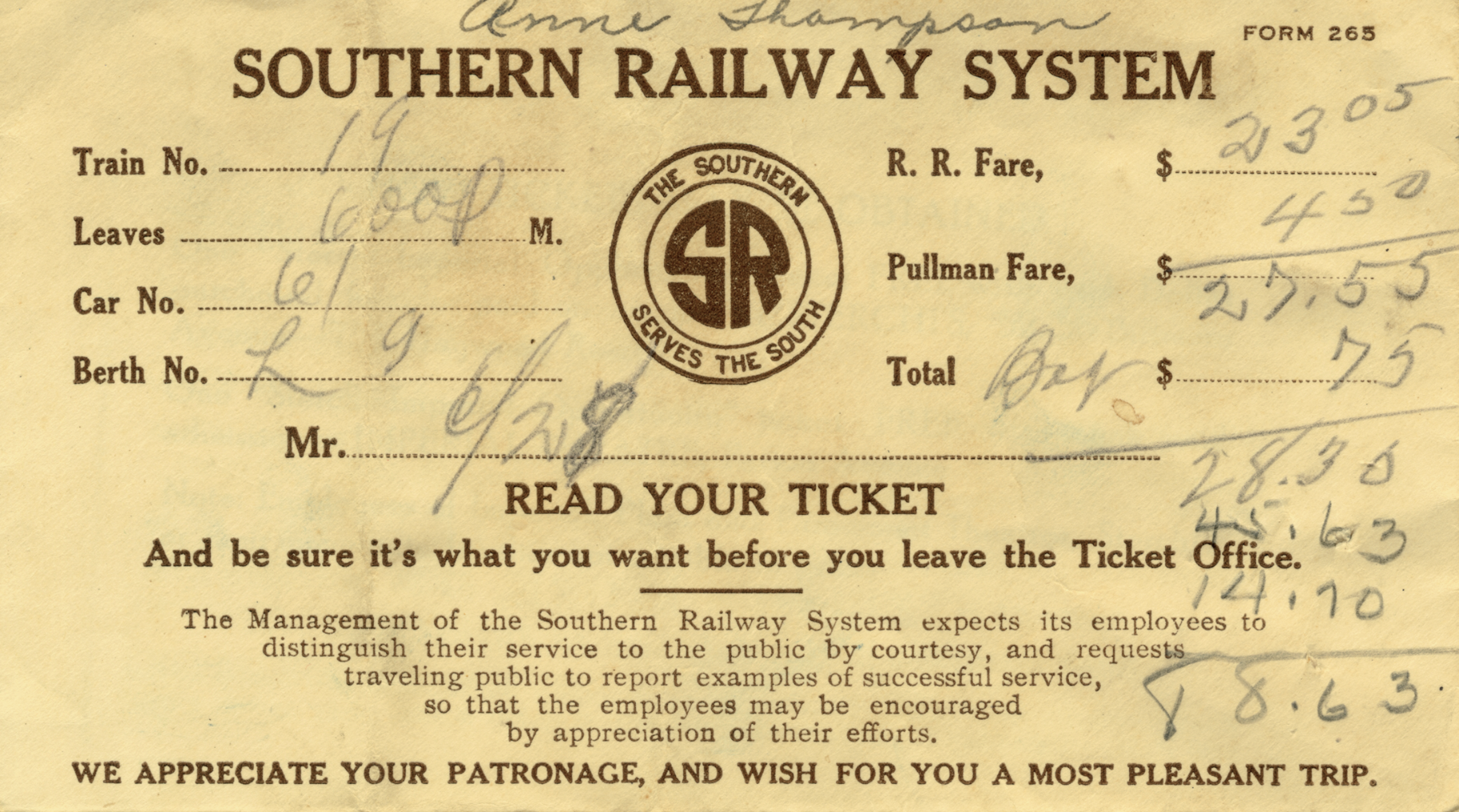
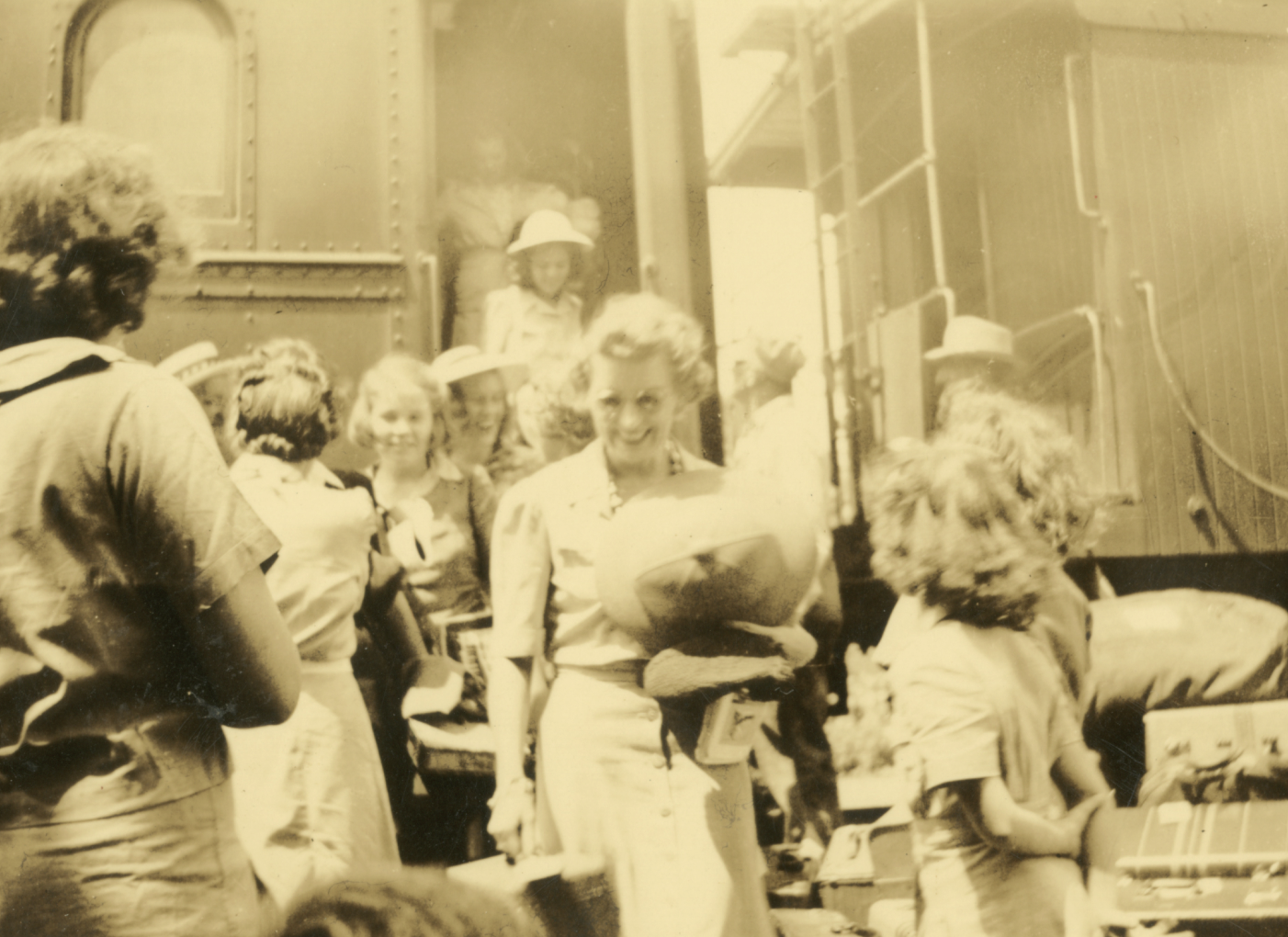
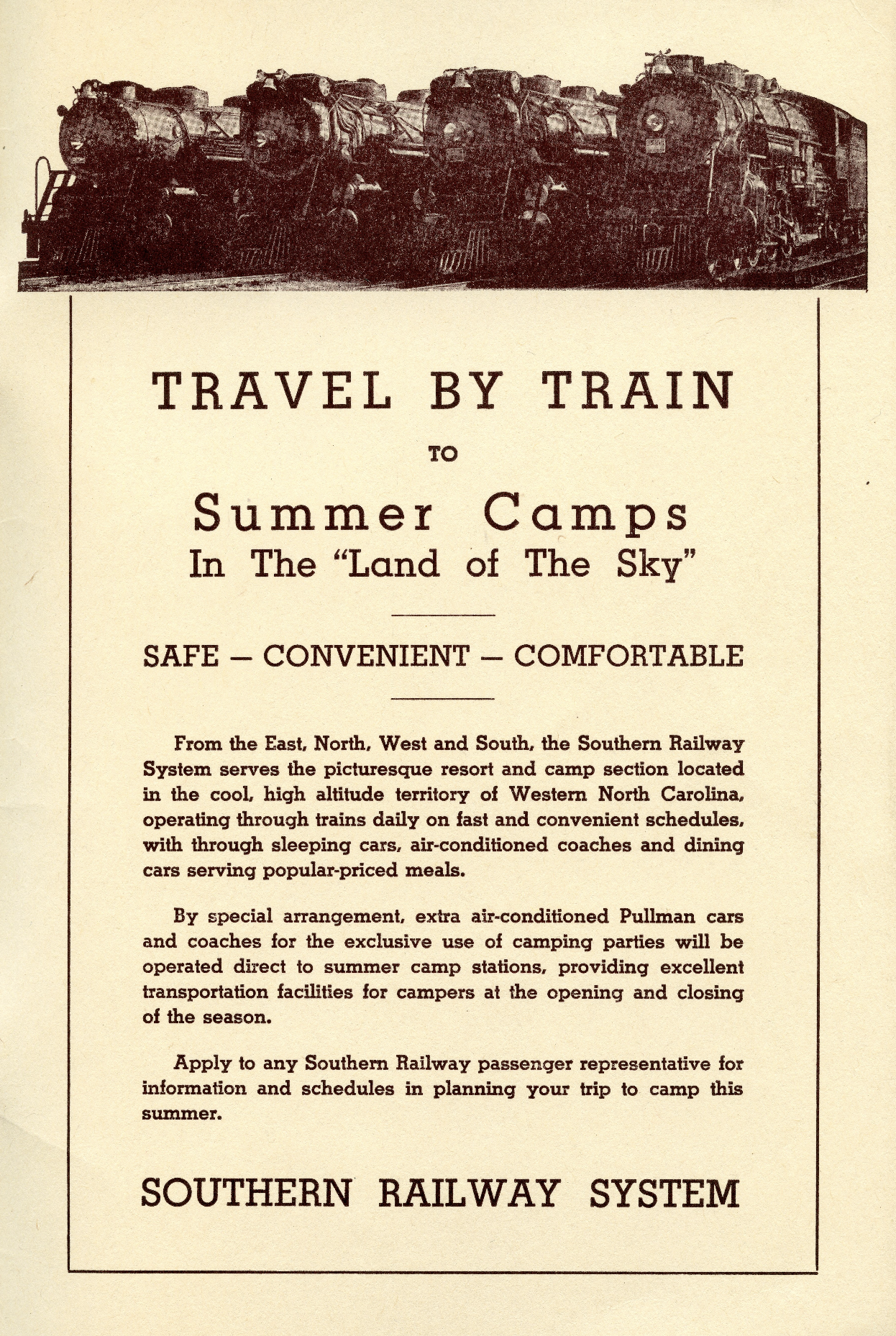
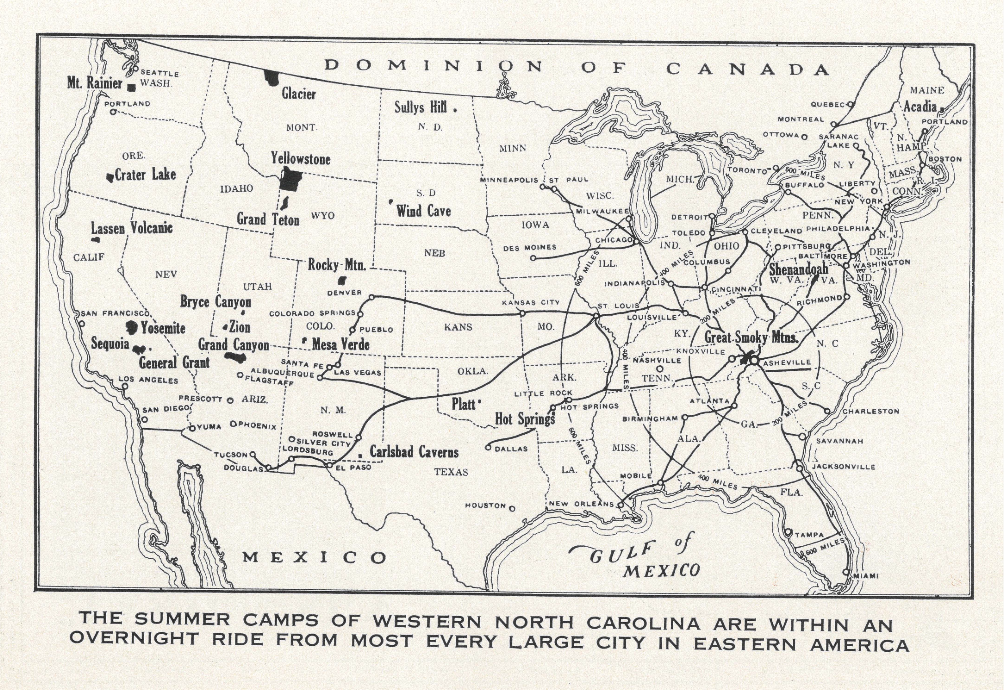
Film clips of Camp Arrowhead (Zirconia, NC) campers at the railway station, c. mid-20th century
“I can feel my heart pound even today as I recall the memory of waiting to see the headlights on the train and hear the whistle…We spent the night on the train and arrived early the following morning. That drive down Greystone’s long driveway and the smell of the pines is surely what you feel when you arrive in Heaven.”
— lucy Hart Milward de Movellan, Camp Greystone Camper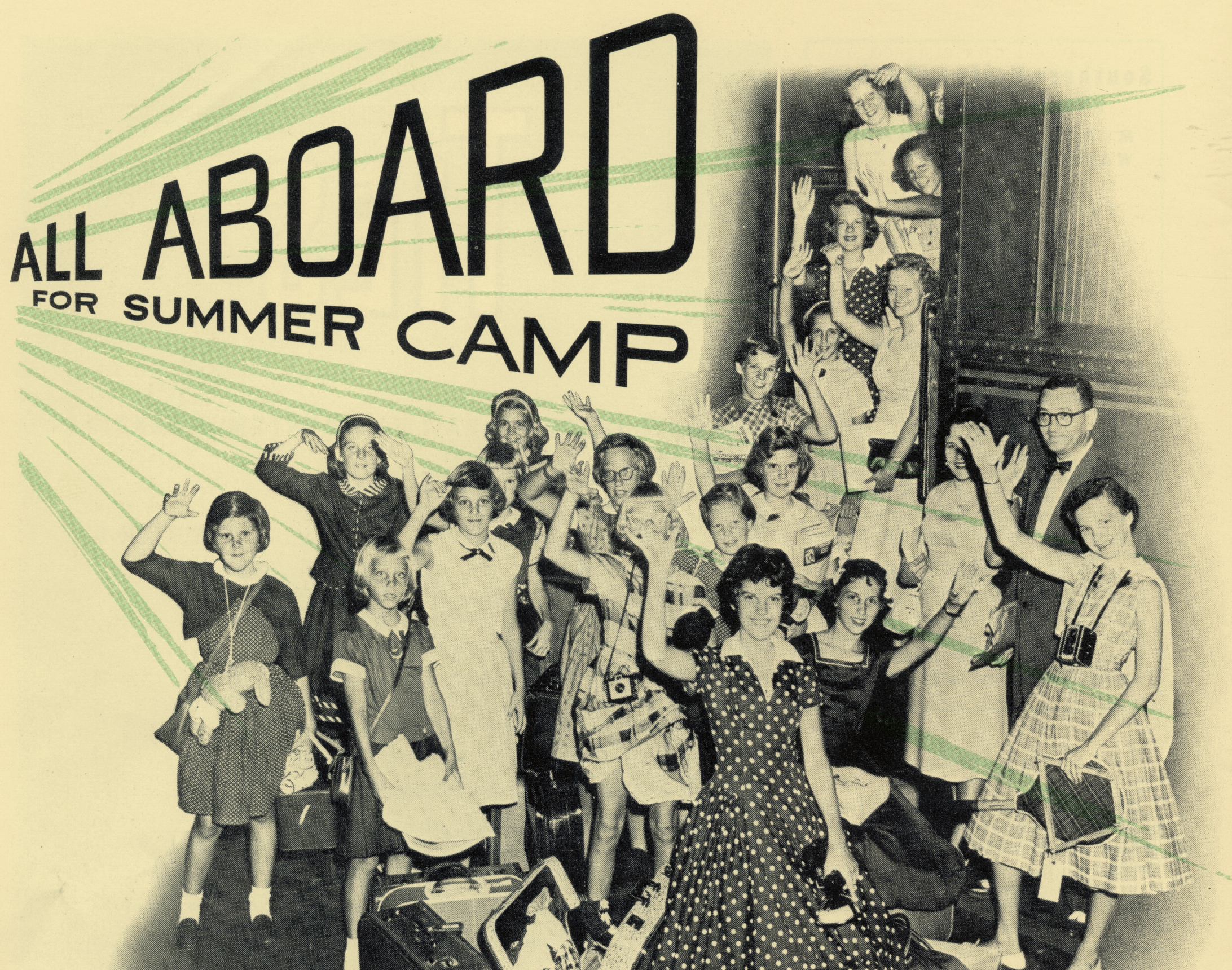
“Ties: The Southern Railway Magazine,” August 1956
INTRODUCTION • CAMP ORIGINS • CAMP EVOLUTIONS • CAMP CULTURE • CAMP LIFE • MUSEUM GALLERY